
Federal Debt Grew $2.46 Trillion in Fiscal 2026 to End at $40.1 Trillion
The federal debt grew $2.46 trillion in fiscal 2026 and closed at $40.097 trillion, the first fiscal year to end above $40 trillion. Here is what it costs.


The best small business loans for bad credit offer APRs from 10.1% to 99% for borrowers with 500–619 FICO, with Fundbox accepting 600+ FICO at 10.1%–20% APR, CAN Capital approving 550+ at 15%–36%, and SBA microloans through CDFIs reaching borrowers at 580+ FICO for 8%–13% APR. Equipment financing at 6%–16% is the lowest-cost option because the asset serves as collateral, reducing the lender’s dependence on your credit score.
Table of Contents
These lenders specifically approve borrowers below 620 FICO. Ranked by minimum credit requirement and rate competitiveness. All rates verified against CFPB lending data as of March 2026.
| Lender | APR Range | Loan Amount | Min FICO | Funding Speed | Product Type | Best For |
|---|---|---|---|---|---|---|
| SBA Microloan (CDFI) | 8%–13% | Up to $50K | 580 | 2–6 weeks | Term loan | Cheapest option below 620 |
| Equipment financing | 6%–16% | $5K–$500K | 600 | 3–7 days | Secured loan | Asset purchases, lowest rate |
| Fundbox | 10.1%–20% | $1K–$150K | 600 | Next day | Line of credit | Fast LOC, flexible draws |
| CAN Capital | 15%–36% | $2.5K–$250K | 550 | 24–48 hrs | Term / MCA | Lowest FICO threshold |
| OnDeck | 27.3%–99% | $5K–$250K | 625 | Same day | Term loan | Same-day emergency capital |
| Bluevine | 7.8%–25% | $5K–$250K | 625 | 24 hours | Line of credit | Best rate at 625+ FICO |
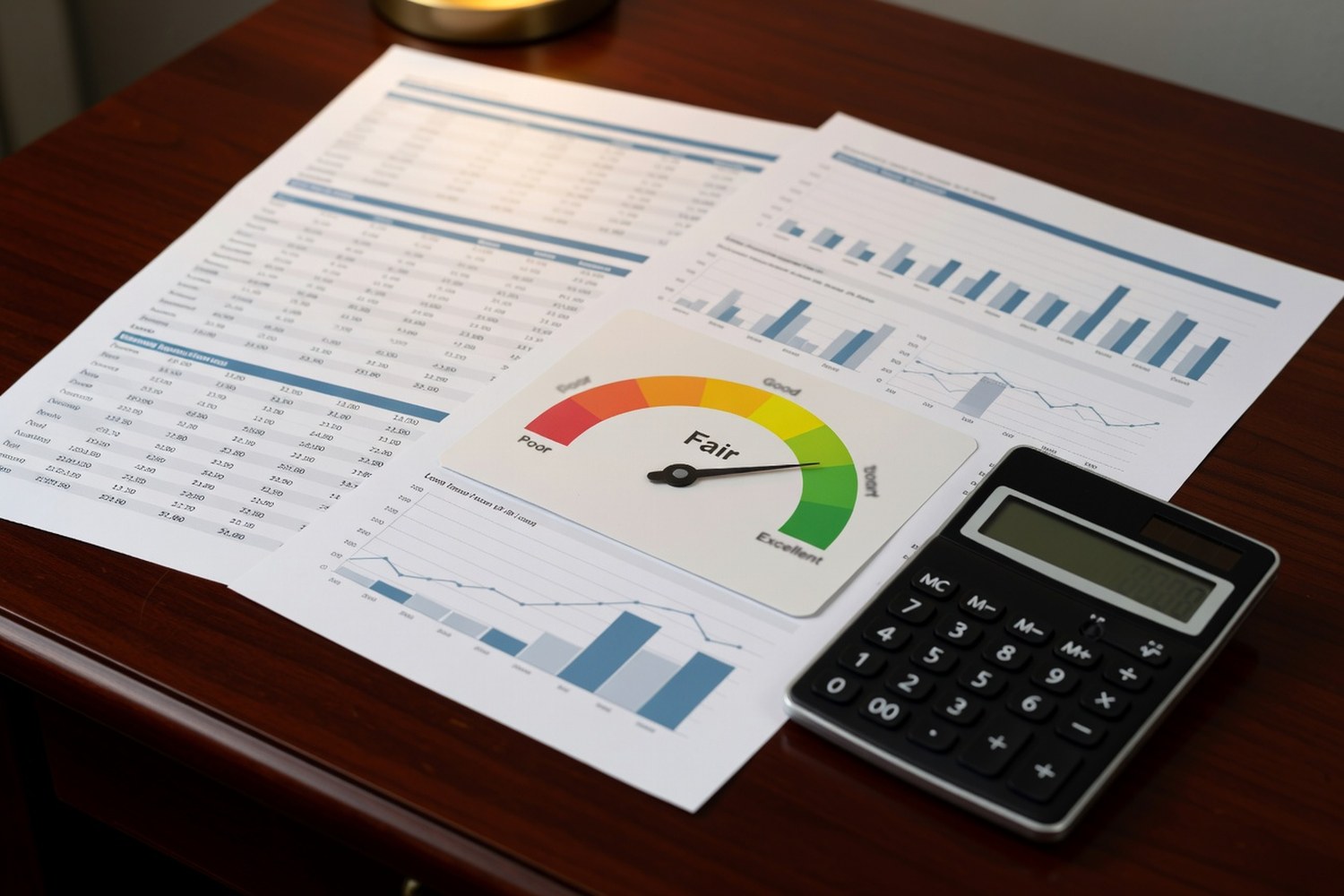
The interest rate penalty for bad credit is steep. Here is the real cost difference on a $50,000 business loan at different credit tiers, based on rates from the lenders above and the Federal Reserve’s G.19 commercial lending data.
| Credit Tier | FICO Range | Typical APR | Monthly Payment (3yr) | Total Interest | Extra Cost vs 720+ |
|---|---|---|---|---|---|
| Excellent | 720+ | 10% | $1,613 | $8,075 | — |
| Good | 680–719 | 15% | $1,733 | $12,400 | +$4,325 |
| Fair | 620–679 | 25% | $1,997 | $21,882 | +$13,807 |
| Poor | 550–619 | 35% | $2,275 | $31,912 | +$23,837 |
At 550 FICO, a $50K loan costs $23,837 more in total interest than the same loan at 720 FICO. That is nearly 50% of the principal amount lost to the credit penalty alone. Every 40-point improvement in your FICO saves approximately $5,000–$8,000 over a 3-year term. Use the Business Loan Calculator to model your specific scenario.
SBA microloans (580+ FICO). The cheapest option for bad-credit borrowers. CDFIs distribute SBA microloans up to $50K at 8%–13% APR with terms up to 6 years. CDFIs specifically serve underbanked communities and evaluate business viability alongside credit. Free business counseling is included. Find your local CDFI through the CDFI Fund database or SBA local assistance finder.
Equipment financing (600+ FICO). The collateral (vehicle, machinery, technology) reduces lender risk, allowing approval at lower credit scores with rates of 6%–16% APR. A $25K equipment loan at 12% over 3 years costs $830/month. The equipment itself is repossessed on default, not personal assets. Model payments with the Equipment Loan Calculator.
Online lines of credit (600+ FICO). Fundbox offers $1K–$150K at 10.1%–20% APR with next-day funding. Bluevine requires 625+ but offers better rates at 7.8%–25%. Lines charge interest only on drawn amounts, making them cheaper than term loans if you don’t use the full balance continuously.
Revenue-based financing (no FICO minimum). Lenders like CAN Capital evaluate monthly card volume ($8K+) and bank deposits instead of credit. Factor rates of 1.15x–1.45x on $2.5K–$250K with daily holdback repayment. Effective APRs of 30%–80% make this expensive but available when other options are exhausted. See our detailed merchant cash advance guide.
Secured loans (600+ FICO). Pledging collateral (real estate, equipment, inventory) lowers your rate by 2–5 points compared to unsecured. A $50K secured business loan at 15% costs $1,733/month while the same amount unsecured at 25% costs $1,997 — a $9,500 savings over 3 years. The risk: you lose the collateral if you default.
Apply where you bank. Your existing bank sees your deposit history, cash flow patterns, and account management. A borrower with 580 FICO but 2 years of steady $15K+ monthly deposits is a stronger applicant than a 620 FICO borrower with erratic deposits. According to the FDIC, community banks approve 60% of small business applications from existing customers vs 30% from new applicants.
Offer collateral. Any asset reduces lender risk: equipment, vehicles, inventory, real estate, or even accounts receivable. Collateral can shift your application from “declined” to “approved at a higher rate.” Even a personal vehicle worth $15K can secure a $10K working capital loan.
Add a co-signer. A business partner or family member with 680+ FICO can co-sign, giving you access to rates you couldn’t get alone. The co-signer is liable if you default, so this is a serious commitment. But it can drop your rate from 35% to 15% on $50K — saving $15,000+ over 3 years.
Start with a small loan. Borrow $5K–$10K from Fundbox or Kabbage, repay on time for 6 months, and your profile improves for larger future loans. Some lenders offer rate reductions of 2–5 points for repeat borrowers with clean payment history, regardless of FICO. Compare your options with our fast loan comparison.
Stacking multiple MCAs. Taking a second MCA before the first is repaid doubles your daily holdback to 30%–40% of card sales. This is the #1 cause of MCA-related business failure. If your first MCA is not repaid, refinance with a term loan instead of stacking.
Ignoring the effective APR. MCAs advertise factor rates (1.2x, 1.3x) that look affordable but translate to 40%–350%+ effective APR depending on repayment speed. Always calculate the APR before signing. Use our Business Loan Calculator to convert factor rates to APR.
Paying for “guaranteed approval” leads. Legitimate lenders do not charge upfront fees to apply. If a company asks for $500–$2,000 before reviewing your application, it is a scam. The FTC warns about advance-fee loan scams that specifically target bad-credit borrowers.
Borrowing more than you can repay. With bad credit comes higher payments. A $50K loan at 30% APR requires $2,136/month for 3 years. If your monthly net income after expenses is $3,000, that loan consumes 71% of your cash flow — a recipe for default. Keep total debt service below 40% of net income. Check affordability with the Business Loan Affordability Calculator.
Very limited options. CAN Capital accepts 550+ for revenue-based financing at 15%–36% APR. Merchant cash advances have no FICO minimum but cost 40%–350%+ effective APR. SBA microloans through CDFIs accept 580+. Below 550, improving your score first is almost always the better financial decision.
Revenue-based financing from CAN Capital (550+ FICO, $8K+ monthly revenue) has the lowest credit bar. Fundbox lines of credit (600+ FICO) are the cheapest easy option at 10.1%–20% APR with next-day funding. SBA microloans (580+) offer the best rates but take 2–6 weeks to fund.
On a $50,000 loan over 3 years: 720+ FICO pays ~$8,075 in total interest at 10% APR. 580 FICO pays ~$31,912 at 35% APR. The credit penalty is $23,837 — nearly 48% of the principal. Every 40-point FICO improvement saves roughly $5,000–$8,000 over the loan term.
Business loans reported to personal credit bureaus (most online lenders report) can help if you pay on time. Six months of on-time payments typically adds 10–30 FICO points. However, the initial hard inquiry drops your score 5–10 points temporarily. Net positive within 3–6 months of on-time payments.
Generally no. Personal loans for business use create personal liability without business asset protection. If your business fails, personal loan debt follows you. Business-specific products (equipment financing, SBA microloans) offer better terms and separate personal from business liability. See our no personal guarantee options.
3–6 months with focused effort. Paying credit card utilization below 30% adds 20–50 points within 2 statement cycles. Disputing errors and becoming an authorized user on a family member’s old account can add 10–30 points each. Moving from 580 to 640 (one tier up) takes 3–6 months and saves $10,000+ on a $50K loan.
The federal debt grew $2.46 trillion in fiscal 2026 and closed at $40.097 trillion, the first fiscal year to end above $40 trillion. Here is what it costs.

Core PCE inflation held at 3.0% in August while consumer spending jumped 0.9% and the saving rate fell to 4.1%, leaving the Fed a split signal before the October FOMC meeting.

Every Treasury maturity from three years out to 30 years closed at or above 5.00% on September 28, 2026, the first time since July 2007. The 10-year reached 5.24%.

Federal interest expense reached $1,267.8 billion in eleven months of fiscal 2026, topping all of fiscal 2025, as the average rate on Treasury debt hit a 17-year high.

Treasury raised four bill auction sizes on September 24 and will sell $316 billion on Monday and Tuesday, $18 billion more than the same four tenors raised at their most recent sales.

The 30-year Treasury yield closed at 5.47 percent on September 24, the highest since June 2004, as real yields rather than inflation expectations drove the selloff.