
- Law firms face unique cash flow challenges — contingency fees, delayed settlements, and retainer depletion create financing needs that generic small business loans don’t always address well
- SBA 7(a) loans offer the best terms for practice acquisitions and real estate: up to $5 million, rates of prime + 2.25-2.75% (roughly 10-13% as of March 2026), and terms up to 25 years
- Live Oak Bank and Citi Global Wealth specialize in law firm lending with underwriters who understand legal practice valuations, partner capital structures, and billable hour economics
- Business lines of credit ($25,000-$500,000) are the most practical tool for managing cash flow gaps between case expenses and settlement payouts
- Never use case settlement advances (litigation funding) for general business expenses — effective APRs of 27-60% make them the most expensive capital available to attorneys
Why Law Firms Need Specialized Financing
Law firms operate on cash flow dynamics that would baffle most small business lenders. A personal injury attorney might spend $50,000-$200,000 on case expenses — expert witnesses, depositions, medical record retrieval, court filing fees — years before seeing a dime from a settlement. A litigation boutique might carry $300,000+ in work-in-progress on its books while waiting for billing cycles to convert to collections. A solo practitioner launching a family law practice needs $30,000-$80,000 for office space, practice management software, marketing, and operating expenses before the first retainer check arrives.
This isn’t a regular cash flow problem. It’s a structural feature of how legal practices generate revenue. And generic small business lenders often struggle with it because their underwriting models expect monthly revenue patterns that law firms simply don’t have. A contingency-fee practice might collect $0 for 14 months and then receive a $400,000 settlement fee. That’s an incredible business — but it looks terrifying on a conventional cash flow statement.
That’s why lenders who specialize in law firms exist. Live Oak Bank, Citi Global Wealth at Work, and regional banks with dedicated professional services divisions understand billable hour economics, realization rates, partner capital contributions, and the difference between a firm with $2 million in contingency cases and one with $2 million in collections problems. The right lender sees your practice for what it is. The wrong lender sees a business with irregular revenue and says no.

Getting financing lined up before you need it gives you leverage — applying during a cash crunch limits your options and increases your cost.
Best Loan Types for Law Firms
Business lines of credit ($25,000-$500,000). This is the workhorse of law firm financing. A revolving credit line lets you draw funds for case expenses, payroll during slow collection months, or marketing pushes — then repay as settlements arrive or invoices get collected. You only pay interest on what you use. Rates run 8-18% for established firms with strong financials, higher for newer practices. The flexibility is the point: you can draw $15,000 for an expert witness fee on Monday and repay it when the case settles three months later without carrying unnecessary debt in between.
SBA 7(a) loans ($50,000-$5,000,000). The best option for acquiring an existing practice, purchasing office space, or making major capital investments. SBA rates are capped at prime + 2.25% to prime + 2.75% for most loans — roughly 10-13% as of March 2026. Terms stretch to 25 years for real estate and 10 years for working capital. Live Oak Bank is an SBA preferred lender with a dedicated law firm division, meaning faster processing and underwriters who won’t blink at a contingency-fee revenue model.
Term loans ($25,000-$2,000,000). Fixed-rate, fixed-payment loans for defined purposes: office buildout, technology overhaul, practice management system implementation, or partner buyouts. Bank term loans run 7-13% for well-qualified firms. Online lenders offer faster approval at 12-25%+ for firms that can’t wait 4-6 weeks for a bank decision. Term loans work best when you know exactly how much you need and have a clear repayment timeline.
Equipment financing ($10,000-$500,000). Law firms might not think of themselves as “equipment-intensive,” but the numbers add up: server infrastructure ($15,000-$50,000), practice management software licenses ($5,000-$20,000/year), office furniture for a new location ($10,000-$30,000), and specialized litigation technology for large cases. Equipment loans use the equipment as collateral, which means lower rates (6-12%) and no additional liens on practice assets.
Partner capital loans. Mid-size and large firms use partner capital loan programs to fund partner buy-ins, capital calls, and practice investments. Citi Global Wealth at Work operates a dedicated law firm partner capital program with unsecured loans at competitive rates. These are structured differently from standard business loans — the individual partner borrows against their projected distribution stream, not the firm’s balance sheet. This keeps the firm’s borrowing capacity intact for operational needs.
Top Lenders for Law Firm Financing
Live Oak Bank is the standout SBA lender for law firms. Their dedicated professional services team has funded hundreds of legal practice acquisitions and expansions. As an SBA preferred lender, Live Oak processes applications faster than general-market SBA lenders. They understand practice valuation metrics — revenue per attorney, realization rates, origination trends, client concentration — that generic underwriters wouldn’t know to evaluate. For acquisitions over $350,000 and real estate purchases, Live Oak’s SBA 7(a) loans consistently deliver the lowest total cost.
Citi Global Wealth at Work serves mid-size to large firms through their Law Firm Group. The partner capital loan program is the signature product: unsecured loans for partner buy-ins with repayment structured around distribution schedules. Citi also offers practice-level credit facilities for firms with 10+ attorneys. The relationship model is built for long-term partnerships — Citi assigns a dedicated banker who understands your firm’s financial rhythm. Not practical for solo practitioners, but for growing multi-partner firms, Citi’s expertise is hard to match.
Regional and community banks with professional services lending departments often provide the best combination of relationship banking and competitive rates for firms with $500,000-$5 million in annual revenue. These banks assign a dedicated business banker who gets to know your practice. The rates are competitive with online lenders (8-14%), the service is personal, and they’re more willing to structure creative repayment terms — like seasonal payment schedules that align with your collection patterns.
Online lenders (Bluevine, OnDeck, Fundbox) fill the speed gap when you need capital in days rather than weeks. Business lines of credit from $5,000-$250,000, term loans up to $500,000, and approval decisions within 24 hours. Rates run higher (15-35% for term loans, 15-25% for lines of credit), but for a firm that needs $30,000 for case expenses before a Friday filing deadline, speed has real value. Use online lenders for short-term bridge financing, not long-term practice investment.
Financing Comparison Table
| Loan Type | Amount | Rate Range | Timeline | Best For |
| SBA 7(a) — Live Oak | $50K-$5M | Prime+2.25-2.75% | 4-8 weeks | Acquisitions, real estate |
| Bank term loan | $25K-$2M | 7-13% | 2-6 weeks | Office buildout, tech |
| Business line of credit | $25K-$500K | 8-18% | 1-3 weeks | Cash flow, case expenses |
| Equipment financing | $10K-$500K | 6-12% | 1-2 weeks | Tech, furniture, servers |
| Online lender (Bluevine, etc.) | $5K-$500K | 15-35% | 1-3 days | Emergency bridge capital |
| Partner capital (Citi) | Varies | Competitive | 2-4 weeks | Partner buy-ins, capital calls |
Rates as of March 2026. Actual rates depend on firm revenue, credit, time in business, and loan structure. SBA rate based on current prime of 7.50%.
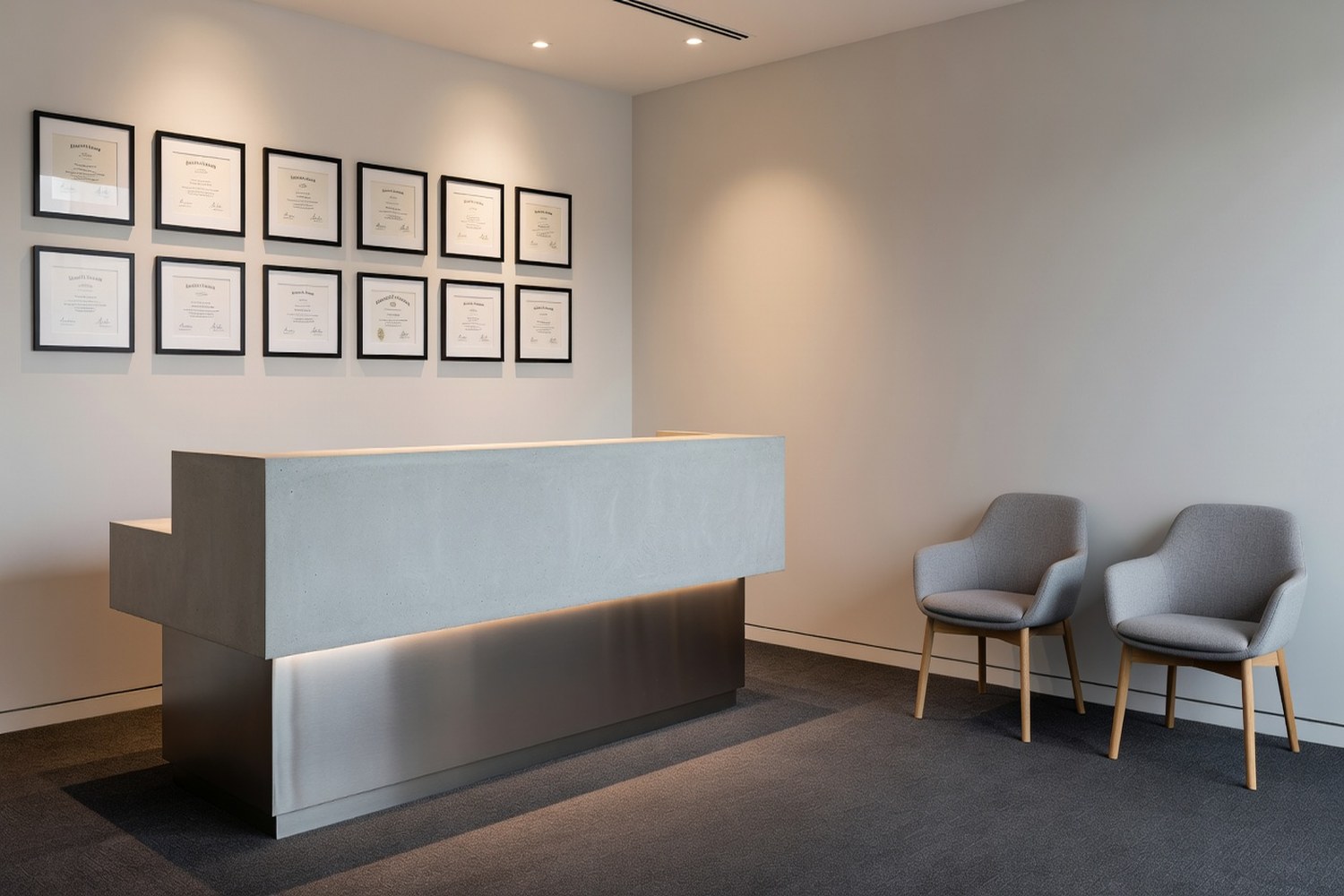
Investing in your practice infrastructure — space, technology, staff — generates returns that compound as your caseload grows.
How to Qualify and What Lenders Evaluate
Revenue and collection history. Lenders care less about your gross billings and more about your actual collections. A firm billing $1.5 million annually but collecting only $900,000 (60% realization rate) looks weaker than one billing $1 million and collecting $850,000 (85% realization). Have 2-3 years of financial statements that clearly show revenue collected, not just billed. For contingency practices, lenders want to see your historical case outcomes — average settlement size, average case duration, and win rate.
Personal credit of the principals. For firms with fewer than 10 attorneys, the founding partner’s personal credit score matters significantly. Most bank and SBA lenders want 680+ from the primary guarantor. Online lenders work with 600+. If your personal credit is below 680, spending 3-6 months improving it before applying can save your firm thousands in interest annually.
Time in business. Bank lenders strongly prefer firms with 2+ years of operating history. SBA lenders typically want at least 1-2 years. Online lenders will work with firms operating as few as 6 months. If you’re a brand-new firm, your options are limited to SBA startup loans (with a detailed business plan), credit cards, personal loans from the founding attorneys, or practice-specific lenders like Live Oak that evaluate attorney credentials alongside financials.
Accounts receivable and work-in-progress. Your outstanding invoices and active cases represent future revenue. Sophisticated lenders — particularly those specializing in law firms — will factor your AR and WIP into their assessment. A firm with $200,000 in collectible AR and $500,000 in active contingency cases has tangible future income, even if current cash is tight. Present this data clearly in your application.
Financing a New Law Firm vs. Acquiring One
Starting from scratch: $30,000-$150,000. Solo practitioners launching a new firm need $30,000-$50,000 to cover 6 months of operating expenses, basic office space, practice management software, website and marketing, malpractice insurance, and state bar dues. Growing firms planning to hire associates from day one should budget $80,000-$150,000. Funding sources: personal savings, personal credit lines, SBA startup loans (if you have a strong business plan), and occasionally family loans. Traditional bank loans are rarely available for brand-new firms without collateral.
Acquiring an existing practice: $200,000-$2,000,000+. Practice acquisitions are dramatically easier to finance than startups because the acquired firm has revenue history, a client base, and tangible assets. Valuation typically runs 0.5-1.5x annual gross revenue, depending on practice area, geographic market, and client concentration. SBA 7(a) loans are the preferred vehicle — 10-25% down payment, 10-25 year terms, and rates capped by SBA guidelines. Live Oak Bank specializes in this exact transaction and can often structure acquisition financing with 10-15% down for well-qualified attorney-buyers.
The hybrid: buying into a partnership. Many attorneys finance their way into an existing firm through partner buy-ins. A typical buy-in for a mid-size firm ranges from $50,000-$500,000, structured as a capital contribution that’s repaid through future distributions. Citi’s partner capital program is specifically designed for this. Some firms finance buy-ins internally (the new partner makes payments from their draw), while others require external financing. If your firm doesn’t have an internal financing program, an SBA loan or bank term loan for the buy-in amount is the standard approach.
Financing Mistakes That Hurt Law Firms
Using litigation funding for operating expenses. Case cost financing and litigation funding are designed to cover expenses directly related to active cases — expert witnesses, depositions, document review. They’re priced assuming the case will generate a settlement that covers the advance plus fees. Using this capital for rent, payroll, or marketing is like using a credit card cash advance to buy groceries: technically possible, financially devastating. Effective APRs on litigation funding run 27-60%, and if the case doesn’t settle as expected, you’re stuck with expensive debt and no revenue to show for it.
Relying on personal credit cards for firm expenses. Nearly half of small business owners use personal credit cards for business expenses, and law firms are no exception. The problems compound: you’re personally liable for business debt, the interest rates (20-28%) are far higher than business financing options, your personal credit utilization spikes (hurting your ability to get a mortgage or car loan), and commingling personal and business funds creates accounting headaches at tax time. Get a business line of credit or business credit card to keep firm expenses separate.
Accepting the first loan offer without shopping. Rate differences between lenders for the same firm can be 3-5 percentage points on a term loan and 5-10 points on a line of credit. On a $200,000 practice acquisition loan over 10 years, the difference between 9% and 12% is $36,000 in additional interest. Get quotes from at least three sources: your existing bank, an SBA specialist like Live Oak, and one online lender for comparison. The 2-3 hours of application time pays for itself many times over.
Ignoring IOLTA and trust account implications. Some lenders require a blanket lien on all business accounts as collateral. For law firms, this creates an ethical conflict: client trust funds in IOLTA accounts cannot be pledged as collateral for firm debt under state bar rules. Before signing any loan agreement, confirm that the lender’s security interest explicitly excludes trust accounts. An attorney who pledges client funds as loan collateral faces bar disciplinary proceedings regardless of whether they ever default on the loan.
Frequently Asked Questions
How much does it cost to start a law firm?
Solo practices can launch for $30,000-$50,000 covering 6 months of operating expenses, basic technology, office space, and marketing. Firms planning to hire from day one should budget $80,000-$150,000. Major costs include office lease deposits, malpractice insurance, practice management software, website development, and initial marketing.
What’s the best loan for a law firm acquisition?
SBA 7(a) loans through a law-firm-specialist lender like Live Oak Bank. Terms up to 25 years for real estate, rates capped at prime + 2.25-2.75%, and down payments as low as 10-15% for qualified borrowers. The SBA guarantee reduces lender risk, which translates to better terms for the buyer.
Can a new law firm get a business loan?
Yes, but options are limited. SBA startup loans require a detailed business plan and personal guarantees. Live Oak Bank and some credit unions will fund new attorney practices based on the attorney’s credentials, work history, and business plan. Most traditional banks require 2+ years of operating history.
What credit score do law firms need for financing?
Bank and SBA loans typically require 680+ from the primary guarantor. Online lenders work with 600+. Credit score requirements apply to the individual attorneys, not the firm entity. Higher scores unlock better rates — the difference between 660 and 740 can be 3-5% on a term loan.
Should I use a business line of credit or term loan?
Lines of credit are best for cash flow management, case expenses, and operating costs — anything with variable timing. Term loans are better for defined one-time investments: office buildout, technology overhaul, or practice acquisition. Many firms maintain both: a line of credit for day-to-day flexibility and a term loan for specific capital projects.
References
- U.S. Small Business Administration, “SBA 7(a) Loan Program,” sba.gov
- American Bar Association, “Law Practice Division Resources,” americanbar.org
- Federal Reserve, “Small Business Credit Survey,” fedsmallbusiness.org
- SCORE, “Starting a Law Practice Business Plan,” score.org
Keep Reading
- Best Business Loans: Compare Rates & Apply Online
- SBA Loans: Compare 7(a), 504 & Microloan Programs
- Medical Small Business Loans & Practice Financing
- Best Long-Term Business Loans: 3, 5, and 10+ Year Options
- Bad Credit Small Business Loans (500+ Credit Score)
Rates and terms are subject to change. This is not financial advice. All information is for educational and comparison purposes only. Verify current rates directly with each lender and consult your firm’s financial advisor before committing to any financing agreement.