| Reviewed by Offain Gunasekara | Last Updated: March 2026
Pet store business loans range from 6.0% to 36.0% APR for amounts between $5,000 and $500,000, with Bluevine and Fundbox funding in 24–72 hours and SBA 7(a) loans offering the lowest long-term rates at 10.5%–13.5% APR. Most pet store owners qualify with 600+ FICO, $100,000+ annual revenue, and 6+ months in business.
Key Takeaways
- The U.S. pet industry reached $147 billion in 2024, with independent pet stores capturing 15%–20% of total retail sales.
- Opening a pet store costs $75,000–$250,000 — SBA microloans ($50K max at 8%–13%) and equipment financing (6%–16%) cover most startup scenarios.
- Inventory financing is critical because live animals, food, and supplies require constant restocking — a $40K line of credit at 7.8% APR costs $260/month in interest.
- Pet stores with grooming services generate 30%–50% higher revenue per square foot, making them stronger loan candidates with lower rates.
- SBA 7(a) loans are the cheapest option for established stores (2+ years, 680+ FICO) at 10.5%–13.5% APR with terms up to 25 years.
Best Lenders for Pet Store Loans
Pet stores qualify for the same business loan products as any retail operation. The lenders below have funded pet retailers specifically, and their requirements align well with typical pet store revenue and credit profiles. Rates are current as of March 2026.
Rates verified March 2026. Your rate depends on credit, revenue, and time in business.
| Lender | APR Range | Loan Amount | Min FICO | Term | Funding Speed | Best For |
|---|
| Bluevine | 7.8%–25.0% APR | $5K–$250K | 625 | 6–12 mo (LOC) | 24 hours | Inventory restocking, working capital |
| Fundbox | 10.1%–20.0% APR | $1K–$150K | 600 | 12–24 wk | Next day | New stores, low-credit owners |
| Kabbage (Amex) | 3.0%–18.0% APR | $2K–$250K | 640 | 6–24 mo | Same day | Small seasonal inventory buys |
| SmartBiz (SBA 7a) | 10.5%–14.0% APR | $30K–$350K | 675 | 10–25 yr | 7–30 days | Store build-out, lease acquisition |
| Equipment financing | 6.0%–16.0% APR | $5K–$500K | 600 | 2–7 yr | 3–7 days | Aquariums, grooming equipment |
| SBA Microloan | 8.0%–13.0% APR | Up to $50K | 620 | Up to 6 yr | 2–6 weeks | Startup pet stores under $50K |
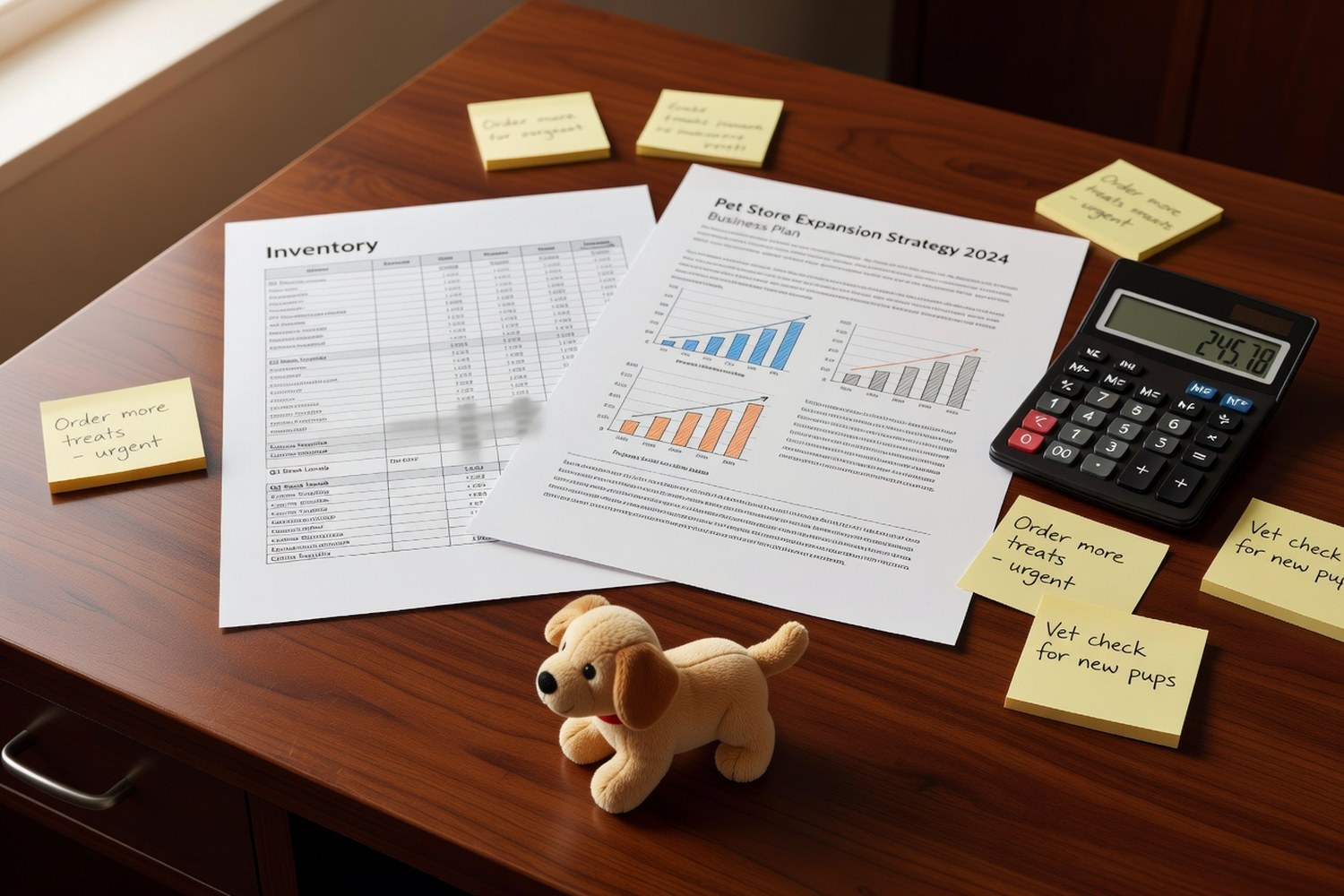
How Much Does It Cost to Open a Pet Store?
Startup costs for an independent pet store range from $75,000 to $250,000 depending on location, inventory depth, and services offered. A basic retail-only store with food, supplies, and small animals costs $75,000–$120,000. Adding a grooming station adds $15,000–$40,000 in equipment. A full-service store with aquarium walls and exotic animals can exceed $200,000, according to the SBA’s startup cost guide.
The largest cost categories are initial inventory ($25,000–$60,000 for food, treats, toys, cages, aquariums, and live animals), lease deposit and build-out ($20,000–$80,000), and equipment ($10,000–$40,000 for shelving, refrigeration, POS systems, and grooming stations). Monthly operating costs run $8,000–$20,000 for rent, labor, utilities, insurance, and inventory replenishment.
💡 Pro Tip: Negotiate initial inventory with distributors before applying for a loan. Pet supply distributors like Central Garden & Pet offer net-30 or net-60 payment terms for new accounts, reducing your upfront loan need by $15,000–$30,000. Combine a $50K SBA microloan for build-out with distributor trade credit for inventory, and you may not need a six-figure loan. Use our Business Loan Calculator to model different scenarios.
Types of Pet Store Business Loans
Business lines of credit. The most practical product for established pet stores because inventory needs fluctuate seasonally. Holiday and summer months require 30%–50% more stock. Bluevine and Fundbox offer revolving lines with next-day draws, so you stock up before the holiday rush and repay as sales come in. A $40K line at 12% APR costs $400/month on a full draw. Compare more fast business loan options for seasonal inventory.
SBA 7(a) loans. Best for store openings, major renovations, or acquiring an existing pet store. Rates of 10.5%–13.5% APR with terms up to 25 years keep monthly payments manageable — a $150K SBA loan at 11.5% over 10 years costs $2,117/month. SmartBiz streamlines the process for amounts under $350K. The CFPB’s small business lending portal explains your rights during the SBA application process.
Equipment financing. Aquarium systems ($5,000–$25,000), grooming tables and dryers ($3,000–$15,000), commercial refrigeration ($4,000–$12,000), and POS systems ($2,000–$5,000) all qualify. The equipment serves as collateral, producing rates of 6%–16% APR. Approval takes 3–7 days with 600+ FICO. Model payments with the Equipment Loan Calculator.
SBA microloans. Capped at $50,000 with rates of 8%–13% and terms up to 6 years. Available through local SBA intermediary lenders with lower credit requirements (620+) than 7(a) programs. Funding takes 2–6 weeks.
Short-term online loans. For urgent needs like a broken HVAC system or a chance to acquire inventory at discount. OnDeck funds same-day at 27%–99% APR. Expensive, but a $10K emergency repair loan at 30% for 6 months costs $1,600 in interest — manageable if it prevents losing $50K in live inventory.
How to Qualify for a Pet Store Loan
Credit score. Online lenders accept 600–640 FICO. SBA microloans require 620+. SBA 7(a) requires 675+. A 720+ FICO owner can access Bluevine at 7.8% while a 610 FICO owner gets 18%+ — a difference of $4,080/year on a $40K balance.
Revenue. Online lenders require $100K–$250K annual revenue. The average independent pet store generates $300,000–$800,000 annually, so most established stores clear this easily. Startups may qualify for SBA microloans or equipment financing based on projections.
Time in business. Online lenders accept 6–12 months. SBA 7(a) requires 2+ years. Startups under 6 months are limited to microloans or revenue-based products.
Business plan. SBA lenders require a formal business plan with market analysis and financial projections. For pet stores, emphasize the local competitive landscape (distance to nearest PetSmart or Petco), recurring revenue from food and grooming, and 40%–60% margins on specialty products. The SBA’s business plan guide walks through the required format.
💡 Pro Tip: Add grooming services before applying for a loan. Pet grooming has 50%–70% profit margins and generates predictable recurring revenue ($40–$100 per appointment, 15–30 appointments/week = $31,000–$156,000/year). Lenders weigh recurring revenue heavily. A pet store doing $300K/year retail-only is a weaker applicant than one doing $250K retail + $80K grooming. A $15,000 equipment loan for grooming stations pays for itself within 6 months.
Best Uses for Pet Store Financing
Initial inventory stocking. A first order of $25K–$60K covers premium food brands, treats, toys, leashes, crates, aquarium supplies, and small animals. Use a line of credit or SBA microloan rather than a long-term loan, since inventory turns over every 30–60 days.
Store build-out. Retail renovations run $30–$80 per square foot. A 2,000-sq-ft build-out costs $60,000–$160,000 including plumbing for aquariums, ventilation, and electrical. SBA 7(a) keeps payments under $2,000/month even on $150K+.
Aquarium systems. Specialty freshwater and saltwater walls cost $5,000–$25,000 per installation. Fish sell at 200%–400% markup over wholesale and attract repeat customers for food, chemicals, and accessories. Equipment financing at 6%–16% APR uses the systems as collateral.
Grooming expansion. A full grooming setup costs $10,000–$25,000. With 4–6 appointments/day at $40–$100 each, a $15K investment generates $600–$2,400/week in additional revenue.
Working capital. January through March are typically slowest for pet retail. A $20K–$40K cash flow line of credit bridges payroll and rent until spring foot traffic returns.
Frequently Asked Questions
How much does it cost to open a pet store?
Startup costs range from $75,000 to $250,000 depending on location, inventory, and services. A basic retail store costs $75K–$120K. Adding grooming adds $15K–$40K. A full-service store with aquariums and exotic animals can exceed $200K. Budget 6 months of operating expenses ($48K–$120K) as reserve.
What credit score do I need for a pet store loan?
Online lenders like Fundbox accept 600+ FICO. SBA microloans require 620+. SBA 7(a) loans require 675+. Borrowers with 720+ access the best rates at 7.8% from Bluevine. Improving from 620 to 700 saves $3,000–$6,000/year in interest on $50K.
Can I get a loan to buy an existing pet store?
Yes. SBA 7(a) loans fund business acquisitions up to $5 million, with the business and its assets as collateral. Most acquisition loans require 10%–20% buyer equity and a validated business valuation.
What is the best loan for pet store inventory?
A revolving line of credit is ideal because pet inventory turns over every 30–60 days. Bluevine ($5K–$250K at 7.8%–25%) and Kabbage ($2K–$250K at 3%–18%) let you draw for purchases and repay as products sell, with interest only on the outstanding balance.
Are pet stores profitable enough to qualify for loans?
Yes. The average independent pet store generates $300K–$800K annually with net margins of 5%–15% on retail and 50%–70% on grooming. Lenders look for 1.25x DSCR. A store with $50K annual net income can service roughly $3,300/month in payments.
How long does it take to get a pet store business loan?
Online lenders fund in 24–72 hours. SBA microloans take 2–6 weeks. SBA 7(a) through SmartBiz takes 7–30 days. Equipment financing takes 3–7 days. Apply to multiple lenders simultaneously since most use soft credit pulls.
Advertiser Disclosure: PrimeRates.com may receive compensation from lenders when you click through and complete an application. This does not affect our editorial objectivity or rankings. Financial Disclaimer: This content is for informational purposes only and does not constitute financial advice. Rates and terms are subject to change. Consult a licensed financial professional before making borrowing decisions.
References & Further Reading
Keep Reading