
- The $50K-$100K range is the growth-stage sweet spot for small businesses — enough capital to hire staff, buy equipment, open a second location, or fund a major inventory purchase without the extreme paperwork of a seven-figure loan
- SBA 7(a) loans offer the best rates (9.75%-14.75% based on current prime of 6.75%) but require 2+ years in business, 680+ credit, and 30-90 days of patience — apply here first if you can wait
- Bank term loans run 7-12% for well-qualified borrowers with strong revenue and 3+ years of history — traditional banks are the cheapest non-SBA option at this loan size
- Online lenders (Bluevine, OnDeck, Funding Circle) fund in 1-3 days at 15-35% APR — you’re paying a premium for speed and flexible qualification, which makes sense for time-sensitive opportunities
- At $50K-$100K, collateral changes the game: equipment financing, SBA loans with inventory/equipment pledged, or a business line of credit secured by receivables all lower your effective rate by 3-8 percentage points
Why $50K-$100K Is the Growth-Stage Range
There’s a reason most small business owners who’ve been operating for 2-5 years end up shopping for a loan in the $50,000-$100,000 range. It’s the amount where real growth happens. You’re past the scrappy startup phase — the $10K line of credit, the personal savings, the credit cards. Now you need capital that moves the needle. A $75,000 equipment purchase that doubles production capacity. A $60,000 inventory order to stock up before your busiest season. An $85,000 buildout for a second location. A $50,000 working capital injection to bridge the gap between landing a big contract and getting paid for it.
At this level, you’ve outgrown the quick-fix products — payday-style MCAs, microloans, and credit cards don’t make sense for $50K+. But you’re also below the threshold where banks roll out the red carpet with their best terms (that usually kicks in at $250K+). So you’re in the middle — which means you have the most options to evaluate and the most room to overpay if you’re not careful.
The good news: competition among lenders at this size is fierce. SBA-approved lenders, community banks, credit unions, and half a dozen well-funded online lenders are all fighting for your application. That competition works in your favor — but only if you shop properly. A business owner who walks into one bank and accepts whatever they’re offered will pay 3-8 percentage points more than the owner who gets three quotes. On $75,000 over 5 years, that 5-point spread costs you $11,000-$13,000 in extra interest.

Getting 3 quotes instead of 1 can save $11,000+ on a $75,000 business loan over 5 years.
Your Financing Options Ranked by Cost
I’m listing these cheapest to most expensive because cost should be your starting filter. Move down the list only when you can’t qualify for the option above it, or when speed genuinely justifies the premium.
1. SBA 7(a) Loan — 9.75%-14.75% (cheapest). The gold standard for small business lending. Current max rates are based on prime (6.75%) plus a lender spread of 3%-8% depending on loan size and term. For a $75,000 SBA 7(a) loan, the maximum rate is prime + 6% = 12.75%. Government guarantee (75% at this size) means lenders take less risk, which means lower rates for you. Repayment terms up to 10 years for working capital, 25 years for real estate. The catch: 2+ years in business preferred, 680+ credit score, full documentation (tax returns, financial statements, business plan), and 30-90 days from application to funding.
2. Bank term loan — 7%-13%. Traditional banks offer excellent rates for established businesses. At $50K-$100K, community banks and credit unions are often more accessible than the big nationals — they know local businesses, they have more flexible underwriting, and they’re eager to grow their commercial portfolios. Requirements: 3+ years in business, $250K+ annual revenue, 700+ credit, existing banking relationship helps. Timeline: 2-4 weeks.
3. Business line of credit — 8%-25%. Not a lump sum but a revolving credit facility you draw from as needed. At $50K-$100K, this makes sense for seasonal businesses, businesses with lumpy revenue, or those who need flexibility to draw and repay. Bluevine offers lines up to $250K with revenue-based qualification. Fundbox goes to $150K with fast draws. You only pay interest on what you draw — if you have a $75K line and draw $30K, you’re paying interest on $30K.
4. Online term loan — 15%-35%. OnDeck, Funding Circle, and Lendio marketplace offer $50K-$100K with 1-3 day funding. The rate premium is real — on $75,000 at 25% versus 10%, you pay $22,000 more in interest over 3 years. But if you need $75K by Friday to secure a warehouse lease, and the SBA process takes 60 days, the math might still work in your favor. Use online lenders when time-sensitive opportunity cost exceeds the interest premium.
5. Equipment financing — 5%-30%. If your $50K-$100K need is specifically for equipment, this is often the cheapest path. The equipment itself is collateral, which dramatically reduces lender risk and your rate. A $70,000 commercial oven, a $90,000 delivery truck, a $60,000 CNC machine — these all qualify. Rates as low as 5% for new equipment with strong credit. Terms match the equipment’s useful life (3-7 years typically).
Lender Comparison Table
| Loan Type | APR Range | Max Term | Speed | Min. Credit | Best For |
| SBA 7(a) | 9.75%-14.75% | 10-25 yr | 30-90 days | 680+ | Expansion, working capital |
| Bank Term | 7%-13% | 5-10 yr | 2-4 weeks | 700+ | Established businesses |
| Line of Credit | 8%-25% | Revolving | 1-7 days | 620+ | Seasonal or lumpy revenue |
| Online Term | 15%-35% | 1-5 yr | 1-3 days | 580+ | Speed-critical needs |
| Equipment | 5%-30% | 3-7 yr | 3-10 days | 600+ | Specific asset purchases |
Rates as of March 2026 based on current prime rate of 6.75%. SBA rates per SBA maximum allowable rate schedule. Actual rates vary by lender and borrower profile.
Real Monthly Payment Scenarios
Here’s what $75,000 (the midpoint of this range) actually costs across different products and terms. These numbers are what you’ll feel in your business checking account every month.
SBA 7(a) at 11% over 7 years: $1,180/month. Total interest: $24,139. Total cost: $99,139. This is the benchmark — the cheapest option for most borrowers. The monthly payment is manageable for a business doing $300K+ in revenue.
Bank term loan at 9% over 5 years: $1,558/month. Total interest: $18,470. Total cost: $93,470. Higher monthly payment than SBA (shorter term), but actually less total interest. Best for businesses with strong cash flow that want to be debt-free faster.
Online lender at 22% over 3 years: $2,870/month. Total interest: $28,327. Total cost: $103,327. The monthly payment is nearly 2.5x the SBA option. On $300K revenue, this payment consumes over 11% of gross monthly revenue — uncomfortable but survivable if the loan funds revenue-generating activity.
Equipment financing at 8% over 5 years: $1,521/month. Total interest: $16,263. Total cost: $91,263. Cheapest total cost because the equipment collateral lowers the rate. If your $75K need is for a specific asset, this is almost always the best path.
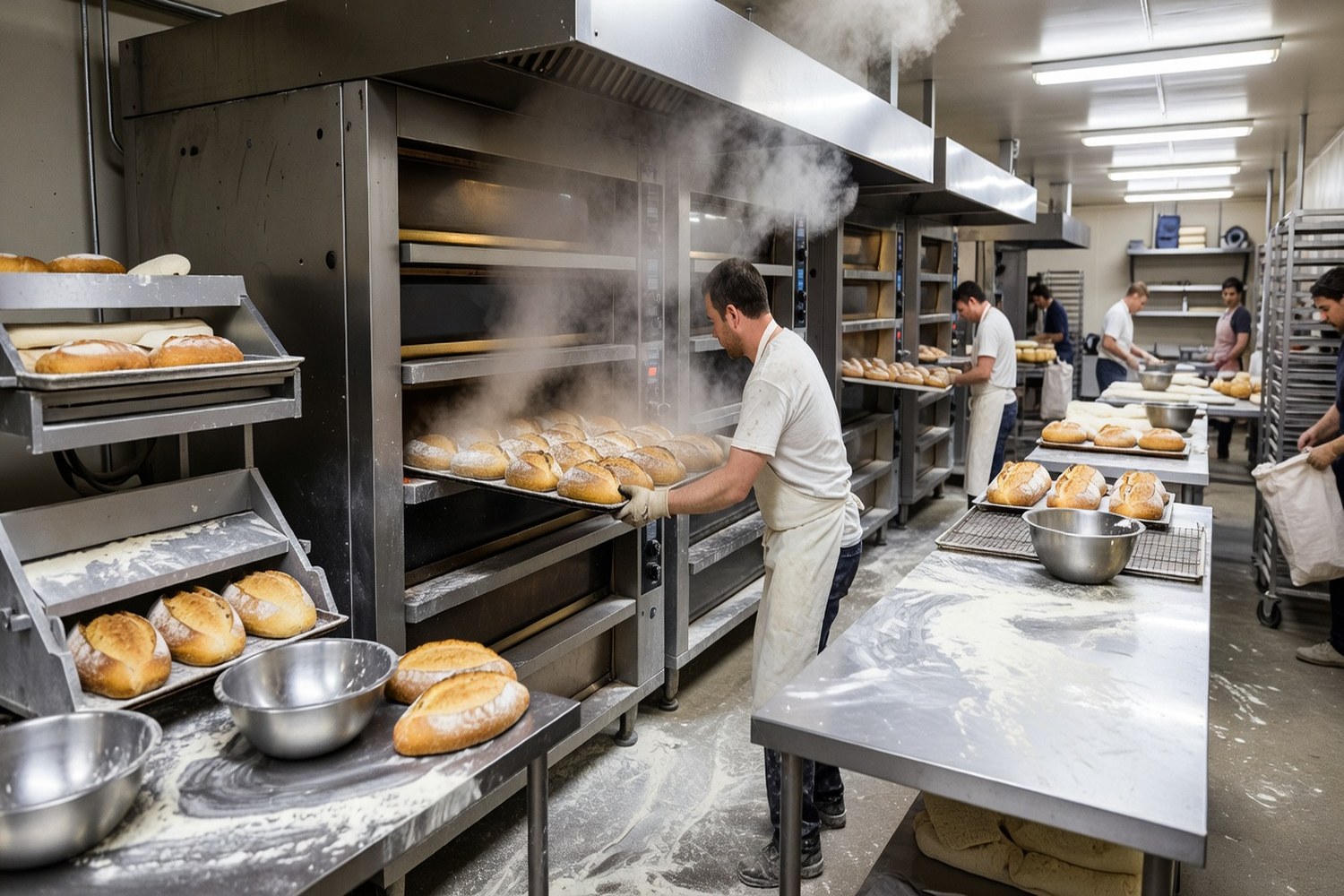
Equipment purchases ($50K-$100K range) often qualify for the lowest rates because the equipment itself serves as collateral.
What Lenders Want to See
Revenue and cash flow are king. At $50K-$100K, lenders want to see consistent monthly revenue that comfortably covers the payment. The magic number: a Debt Service Coverage Ratio (DSCR) of 1.25x or better. That means for every $1 of loan payment, you have $1.25 in net operating income. For a $1,200/month payment, you need $1,500/month in income after expenses. Banks and SBA lenders calculate this rigorously. Online lenders rely more on revenue trends and bank deposits.
Credit score benchmarks. SBA and bank loans: 680+ personal credit, with 700+ getting the best rates. Online lenders: 580-620 minimum, but expect rates 10-15 points higher than what a 720+ borrower gets. Equipment financing: 600+ with the equipment as collateral offsetting credit risk.
Time in business. Most lenders at this size want 2+ years. Under 2 years, your options narrow to SBA microloans (up to $50K only), online lenders, or equipment financing. Under 1 year, you’re essentially limited to personal credit-based options and revenue-based financing — and $50K+ becomes very difficult to access.
Documentation you’ll need. For SBA and bank loans: 2-3 years of business and personal tax returns, year-to-date profit and loss statement, balance sheet, bank statements (6-12 months), business plan (for SBA), personal financial statement, and copies of business licenses/leases. For online lenders: typically 3-6 months of bank statements and a simple application — much lighter documentation.
The SBA 7(a) Path
If you have the time and qualifications, the SBA 7(a) should be your first stop for $50K-$100K. Here’s why — and what the process actually looks like.
Why SBA wins at this size. A $75,000 SBA 7(a) loan at 11% over 7 years costs $99,139 total. The same $75,000 from an online lender at 22% over 3 years costs $103,327 — and with a monthly payment that’s $1,690 higher. The SBA loan gives you lower payments, lower total cost, and a longer runway to grow into the debt. The government guarantee (75% on loans over $150K, 85% under $150K) means SBA lenders offer terms they’d never give on a conventional loan.
SBA guarantee fees (your hidden cost). On a $75,000 loan, the guarantee fee is 2% of the guaranteed portion ($63,750 x 2% = $1,275). This is usually rolled into the loan or paid at closing. Annual servicing fee of 0.55% applies to the outstanding guaranteed balance. Factor these in, but they’re still far cheaper than the rate premium on an online loan.
Timeline reality check. Apply to close in 30-90 days is realistic. SBA Preferred Lenders can go faster (some in 2-3 weeks) because they have delegated authority to approve loans without SBA review. Ask your lender if they’re an SBA Preferred Lender — it matters. If you need money in a week, the SBA isn’t your path. But if your need is 4-8 weeks out, start the SBA process now and use a short-term line of credit to bridge if needed.
How to Apply
Step 1: Define your exact need and timeline. “I need $50K-$100K” is not specific enough. “I need $72,000 for a commercial oven and buildout, delivery within 45 days” is. The amount, purpose, and timeline determine which products fit. Equipment purchase = equipment financing. Working capital with 60-day runway = SBA. Emergency cash by Friday = online lender.
Step 2: Check your credit and gather documents. Pull your personal credit score (free via Credit Karma). Pull your business credit report from Dun & Bradstreet if you have a DUNS number. Gather your last 2 years of tax returns, current P&L, 6 months of bank statements, and a summary of the loan purpose. Having everything ready before you apply accelerates every process.
Step 3: Apply to 3 lenders in parallel. One SBA Preferred Lender (through SBA’s Lender Match tool or your local SCORE chapter). One community bank or credit union where you have an existing relationship. One online marketplace (Lendio or Fundera/NerdWallet) that shops your application across multiple lenders. Three applications give you leverage and comparison data.
Step 4: Compare total cost, not just rate. SBA loans have guarantee fees. Online loans have origination fees. Equipment financing may require a down payment (10-20%). Always ask: what’s the total amount I’ll repay over the life of this loan? That single number cuts through all the complexity of different rate structures, fee schedules, and term lengths.
Frequently Asked Questions
What credit score do I need for a $50K-$100K business loan?
SBA and bank loans want 680+, with 700+ getting the best rates. Online lenders start at 580-620 but charge 15-35% APR. Equipment financing works at 600+ because the equipment is collateral. Higher scores unlock better rates across every product type.
How long does it take to get a $50K-$100K business loan?
Online lenders: 1-3 days. Equipment financing: 3-10 days. Bank term loans: 2-4 weeks. SBA 7(a): 30-90 days (SBA Preferred Lenders can be faster). If speed is critical, apply online while simultaneously starting the SBA process.
What’s the monthly payment on a $75,000 business loan?
SBA at 11% over 7 years: $1,180/month. Bank at 9% over 5 years: $1,558/month. Online lender at 22% over 3 years: $2,870/month. Equipment at 8% over 5 years: $1,521/month. Total cost varies dramatically by product type.
Can I get a $50K-$100K loan with bad credit?
It’s possible through online lenders (580+ minimum) and secured equipment financing (600+), but expect 20-35% APR. SBA and bank loans are generally inaccessible below 640. Consider improving credit for 3-6 months before applying if your score is under 620 — the rate savings at this loan size justify the wait.
SBA 7(a) or online lender — which should I choose?
If you have 680+ credit, 2+ years in business, and can wait 4-8 weeks: SBA. If you need funds in days and can’t wait: online. The interest savings on SBA at this loan size ($15,000-$25,000 over the life of the loan) are substantial enough that waiting is almost always worth it unless timing creates real opportunity cost.
References
- SBA, “7(a) Loan Program,” sba.gov
- Federal Reserve Bank of Kansas City, “Small Business Lending Survey Q3 2025,” kansascityfed.org
- SBA, “Microloan Program,” sba.gov
- SCORE, “Small Business Resources,” score.org
Keep Reading
- Best Small Business Loans: Compare Rates & Apply Online
- SBA Loans: Compare 7(a), 504 & Microloan Programs
- Best Long-Term Business Loans
- Bad Credit Small Business Loans
- $200K Business Loans
Rates and terms are subject to change. This is not financial advice. All information is for educational and comparison purposes only. SBA rates based on current prime rate of 6.75% as of March 2026. Always compare multiple lenders and loan products before committing to business financing.