
- Restaurant business loans range from $5,000 microloans to $5 million SBA loans — the right product depends on whether you’re buying equipment, covering payroll, renovating a space, or opening a new location
- SBA 7(a) loans offer the best rates for restaurants (currently 9.75-13.25% variable, based on prime at 6.75%) with terms up to 25 years — but require 650+ credit, strong financials, and 30-90 days for processing
- Equipment financing (5-30% APR, terms up to 10 years) uses the equipment itself as collateral — ideal for commercial ovens, refrigeration units, POS systems, and kitchen buildouts without tying up cash reserves
- Online lenders like OnDeck, Fundbox, and Fora Financial fund in 1-3 days with lower credit requirements (570-625) — but rates are significantly higher (15-50%+ factor rate) than traditional bank or SBA options
- The restaurant failure rate (roughly 20% in the first year, 60% within five years) means lenders scrutinize restaurants more heavily than other industries — strong cash flow documentation and a detailed business plan dramatically improve approval odds
Types of Restaurant Business Loans
Restaurants burn through cash in ways that other businesses don’t. A broken walk-in cooler on a Friday night isn’t a line item you can plan for — it’s a $12,000 emergency that needs a solution by morning. A landlord doubling your rent isn’t a negotiation you can drag out — it’s a 30-day decision between moving or closing. The financing you choose has to match both the speed you need money and the cost you can absorb on thin margins.
SBA loans (7(a) and 504). The gold standard for established restaurants. Rates capped at prime + 3% to prime + 6.5% (currently 9.75-13.25%). Terms up to 25 years for real estate, 10 years for equipment and working capital. Up to $5 million. The tradeoff: 30-90 day approval process, 650+ credit, strong financials, and mountains of paperwork (three years of tax returns, business plan, financial projections). Best for: buying your building, major expansions, franchise purchases, or refinancing high-cost debt.
Equipment financing. The equipment itself serves as collateral, making approval easier than unsecured loans. Rates from 5-30% depending on credit and equipment type. Terms up to 10 years. Finance commercial ovens ($5,000-$30,000), walk-in coolers ($10,000-$25,000), POS systems ($3,000-$15,000), or full kitchen buildouts ($50,000-$200,000). Some lenders require only 6 months in business and a 575 credit score. Best for: specific equipment purchases where you want to preserve cash flow.
Business lines of credit. Revolving credit you draw against as needed — only pay interest on what you use. Limits from $2,000 to $250,000. Fundbox offers lines to restaurants with just 3 months in operation and $30,000 annual revenue. Perfect for seasonal cash flow gaps, unexpected repairs, and bridging the lag between payroll and revenue.
Short-term loans and MCAs. Fast money — same-day to 3-day funding — from online lenders like OnDeck, Fora Financial, and Clarify Capital. Amounts from $5,000 to $400,000. The cost: factor rates of 1.1-1.5x (equivalent to 30-80%+ APR) with daily or weekly repayment. Minimum credit scores as low as 570. Best for: urgent situations where speed matters more than cost — a broken HVAC system in July, a health department compliance deadline, or a catering opportunity that requires upfront inventory investment.
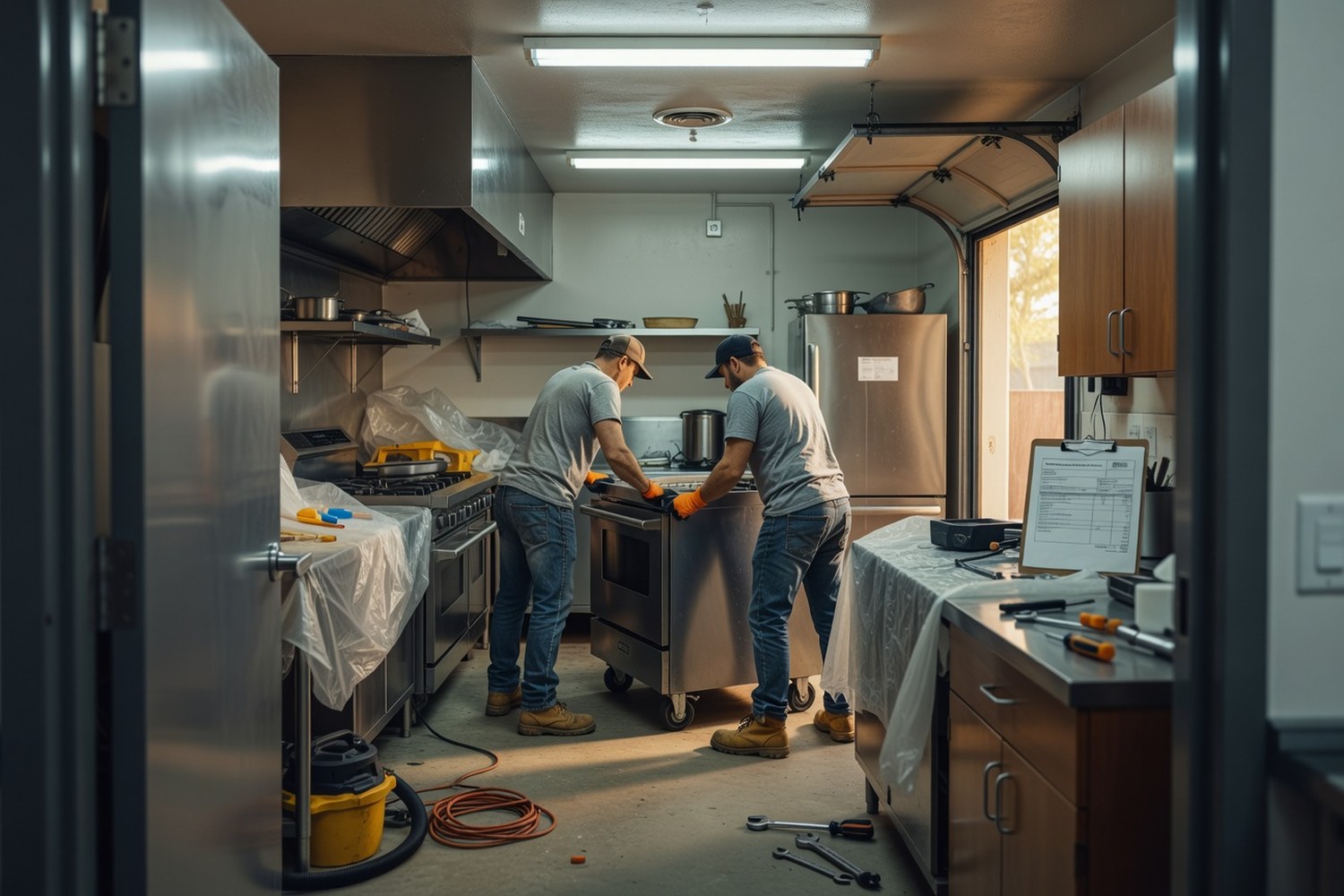
Equipment financing lets you spread a $50,000+ kitchen buildout over 5-10 years, preserving cash for daily operations.
Lender Comparison Table
| Lender / Type | Rate | Amount | Speed | Min Credit | Best For |
| SBA 7(a) Loan | 9.75-13.25% | Up to $5M | 30-90 days | 650+ | Real estate, expansion, refi |
| SBA 504 Loan | 5.86-6.46% fixed | Up to $5.5M | 45-120 days | 680+ | Real estate, major equipment |
| Equipment Financing | 5-30% | Up to $500K | 1-7 days | 575+ | Kitchen equipment, POS |
| Fundbox (LOC) | Varies | Up to $250K | 1-2 days | 600 | Startups, working capital |
| OnDeck (Term) | 27.3-99.9% | $5K-$400K | Same day | 625 | Fast cash, emergency |
| Fora Financial | Factor rate | $5K-$750K | 1-3 days | 570 | Bad credit, high revenue |
| Bank Term Loan | 7-15% | Varies | 2-6 weeks | 680+ | Established, strong credit |
Rates as of early 2026. SBA rates based on prime rate of 6.75%. Online lender rates vary by revenue and credit. Pre-qualify to see your specific offer.
SBA Loans for Restaurants
If you qualify, SBA loans are the cheapest money available for restaurant owners. The government guarantee (up to 85% on loans under $150K, 75% on larger amounts) means lenders take on less risk, which translates to lower rates and longer terms for you.
SBA 7(a) — the workhorse. Up to $5 million for essentially any business purpose: buying or renovating your space, purchasing equipment, hiring staff, covering working capital, refinancing expensive debt. Variable rates currently 9.75-13.25% depending on loan size and term. Repayment: up to 25 years for real estate, 10 years for equipment/working capital. Huntington National Bank is the leading SBA lender by approval volume — a good starting point if you’re not sure where to apply.
SBA 504 — best for real estate. Specifically designed for purchasing or improving commercial real estate and major equipment. Fixed rates (currently 5.86-6.46%) locked in for the life of the loan — this predictability is invaluable for budgeting. Structure: you put 10% down, a CDC (Certified Development Company) covers 40%, and a bank covers 50%. Up to $5.5 million. The fixed rate on a 504 is currently 3-7% lower than a 7(a) variable — on a $500,000 property purchase, that saves $15,000-$35,000 per year in interest.
SBA Microloan — for startups. Up to $50,000 with terms up to 84 months. Designed for new businesses and underserved communities. Administered through nonprofit intermediary lenders, not banks. A food truck that needs $30,000 for initial buildout, or a pop-up concept transitioning to a permanent location, fits this program perfectly.
Restaurant Equipment Financing
Kitchen equipment is the lifeblood of a restaurant — and it’s expensive. A commercial range runs $3,000-$15,000. A walk-in cooler: $10,000-$25,000. A hood ventilation system: $5,000-$20,000. A full kitchen buildout for a new restaurant: $75,000-$200,000. Equipment financing spreads that cost over the useful life of the equipment, keeping your cash available for rent, payroll, and inventory.
How it works. The equipment you’re buying serves as collateral. If you default, the lender repossesses the equipment — not your personal assets (in most cases). This makes approval easier: 575+ credit at some lenders, 6+ months in business, and $50,000+ annual revenue. Terms typically match the equipment’s useful life: 3-5 years for POS systems, 5-7 years for small appliances, 7-10 years for major equipment like commercial ranges and walk-in systems.
Lease vs. buy. Leasing makes sense for equipment that depreciates fast (POS systems, ice machines, technology). You pay lower monthly costs, return it at the end, and upgrade. Buying (financing) makes sense for equipment with long useful lives (ranges, hood systems, refrigeration). You own it outright after the loan, build equity, and can claim Section 179 deductions.
Restaurant-specific equipment costs to plan for: Commercial range/oven ($3,000-$15,000), walk-in cooler/freezer ($10,000-$25,000), dish machine ($3,000-$12,000), prep tables and shelving ($2,000-$8,000), POS system with terminals ($3,000-$15,000), hood and ventilation ($5,000-$20,000), smallwares and startup inventory ($5,000-$15,000), signage and exterior ($2,000-$10,000). Total for a full casual dining setup: $75,000-$150,000. Fast casual or QSR: $40,000-$80,000. Food truck: $50,000-$120,000 (vehicle included).
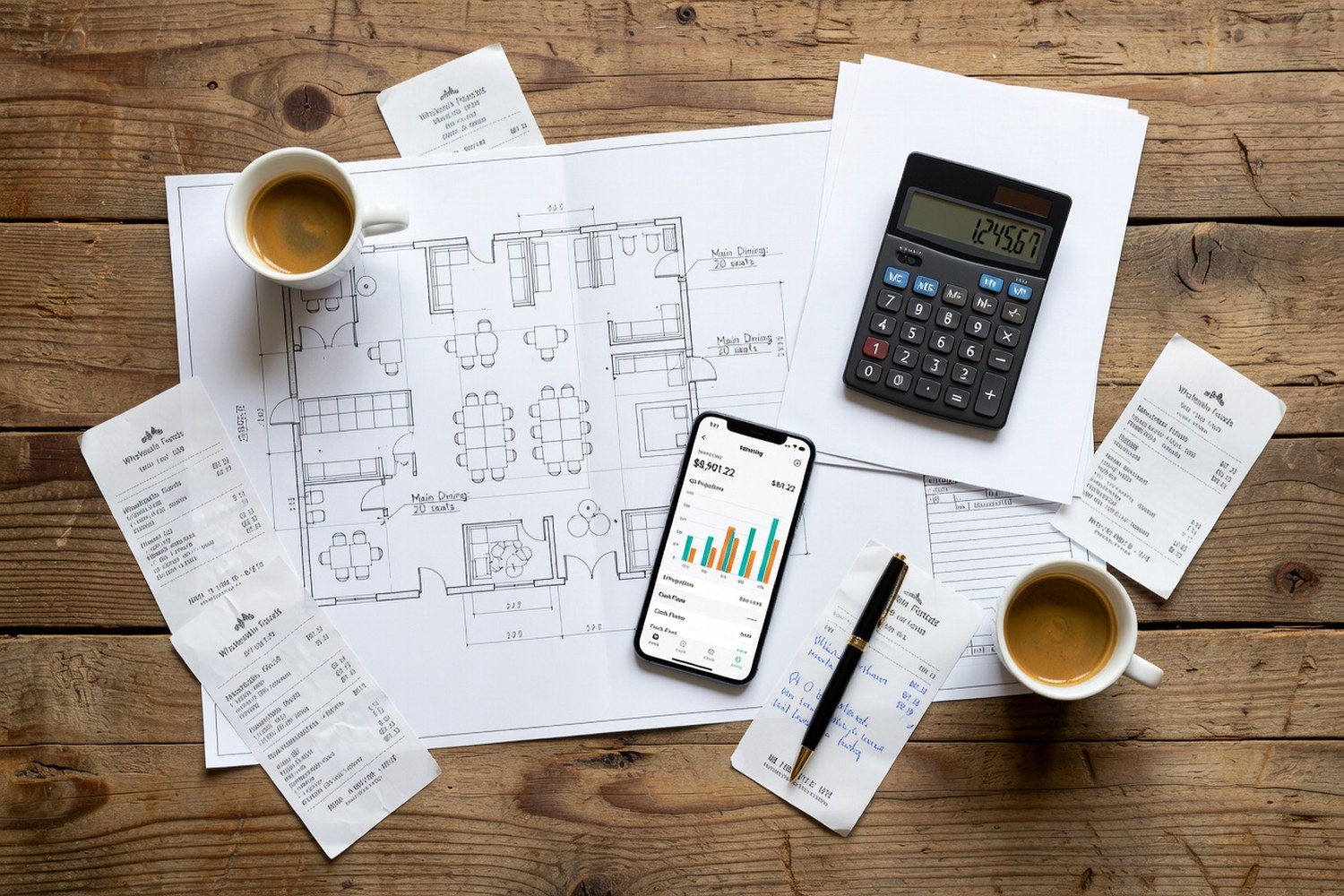
A detailed business plan with realistic financial projections is the single most important document in your restaurant loan application.
Working Capital & Lines of Credit
Restaurant cash flow is uniquely volatile. You might gross $50,000 in a week during December holidays and $18,000 in the same week in January. Food costs spike when supply chains tighten. A single bad Yelp review can crater a Tuesday’s revenue. Working capital financing bridges these gaps without requiring you to sell the stove.
Business line of credit. The most flexible option. You’re approved for a limit ($10,000-$250,000), draw what you need, pay interest only on the drawn amount, and the balance replenishes as you repay. Fundbox is the standout for restaurant startups: 3 months in operation, $30,000 annual revenue, 600 credit score. Funding in 1-2 business days. Use it for: payroll gaps, seasonal inventory stockups, emergency repairs, marketing campaigns around holidays or events.
Short-term loans. A lump sum you repay over 3-24 months with fixed daily or weekly payments. OnDeck funds same-day for amounts up to $400,000 with a 625 credit score. Fora Financial accepts 570+ with $240,000+ annual revenue. The daily repayment structure (typically 10-20% of daily credit card sales, or a fixed daily ACH) is designed around restaurant cash flow patterns — you pay more when you’re busy, which aligns with your ability to pay.
Merchant cash advances (proceed with caution). An MCA isn’t technically a loan — it’s a purchase of your future credit card receivables at a discount. You get $50,000 today and repay $65,000 over 6-12 months via a percentage of daily card sales. The effective APR can exceed 100%. MCAs have no credit score minimums and fund in 24 hours, which makes them tempting during emergencies. But the cost is brutal on restaurant margins. Use an MCA only as a last resort, and never stack multiple MCAs — that’s the fast lane to insolvency.
How to Qualify With Restaurant-Industry Challenges
Lenders know restaurants fail at higher rates than most businesses. They know margins are thin (3-9% net for most full-service restaurants). They know revenue is seasonal and unpredictable. Here’s how to overcome those concerns.
Demonstrate consistent cash flow. Lenders care more about your bank statements than your credit score. Six months of business bank statements showing steady deposits — even if the amounts fluctuate seasonally — prove you have a functioning business. Uneven deposits are fine; lenders understand restaurant seasonality. What kills applications: months with near-zero deposits, frequent overdrafts, or unexplained large withdrawals.
Show industry experience. A first-time restaurant owner with a 750 credit score is a higher risk (in lender eyes) than a 15-year restaurant veteran with a 650. Include your industry resume in the application. Culinary school, management experience at established restaurants, successful previous concepts — all of it reduces perceived risk. SBA lenders weight industry experience heavily.
Keep food and labor costs documented. The two numbers that tell a lender whether your restaurant is viable: food cost percentage (target: 28-33% of revenue) and labor cost percentage (target: 25-30%). If both are in range, your gross margin supports debt service. If either is out of range, address it in your business plan before applying.
Build business credit before you need it. Open a business credit card 6-12 months before you plan to apply for a loan. Use it for supplies and pay it off monthly. This establishes a business credit profile on Dun & Bradstreet and Experian Business — separate from your personal credit. When you apply for the loan, the lender sees an established business with credit history, not a blank file.
How to Get a Restaurant Loan
Step 1: Define exactly what you need and why. “I need money for my restaurant” gets denied. “I need $85,000 to purchase a Vulcan commercial range ($12,000), install a new hood system ($15,000), renovate the dining room ($40,000), and cover 3 months of working capital during renovation ($18,000)” gets approved. Specificity signals competence.
Step 2: Gather documentation. Every lender will want some combination of: 3 years of business and personal tax returns, 6 months of bank statements, profit and loss statement (current year), balance sheet, business plan with financial projections, lease agreement, food service permits and licenses, personal financial statement (SBA Form 413 for SBA loans).
Step 3: Check your credit and fix errors. Pull your personal credit report (AnnualCreditReport.com — free) and your business credit (Dun & Bradstreet, Experian Business). Dispute errors. Pay down credit card balances to below 30% utilization. If your score is below 650, spend 3-6 months improving it before applying for an SBA loan — the rate difference is worth the wait.
Step 4: Apply at 3+ lenders across categories. One SBA-preferred lender (Huntington, Live Oak, or your local community bank). One equipment financing specialist (Taycor, National Funding, or your equipment dealer’s financing partner). One online lender for comparison (Fundbox, OnDeck). Applying to multiple lenders within a 14-day window counts as a single credit inquiry.
Step 5: Compare total cost, not just rate. An SBA loan at 11% over 10 years costs far less than an online loan at 25% over 18 months — even though the monthly payment on the online loan is lower. Always compare: total interest paid, total fees, total repayment amount, and the impact of daily/weekly vs. monthly payments on your cash flow.
Frequently Asked Questions
What credit score do I need for a restaurant business loan?
650+ for SBA loans (the best rates). 625+ for OnDeck. 600+ for Fundbox. 575+ for some equipment lenders. 570+ for Fora Financial. Below 570: focus on improving credit or consider an MCA (but be aware of the high cost). Industry experience and strong revenue can compensate for lower credit scores at many lenders.
Can I get a loan to open a new restaurant?
Yes, but it’s harder than financing an existing restaurant. SBA Microloans (up to $50,000) are designed for startups. Fundbox accepts businesses with just 3 months of operation. Equipment financing is available to new restaurants because the equipment serves as collateral. For larger startup loans ($200,000+), you’ll likely need an SBA 7(a) with a strong business plan, personal assets for collateral, and industry experience.
How long does it take to get a restaurant loan?
Same-day from OnDeck. 1-2 days from Fundbox. 1-3 days from Fora Financial. 1-7 days for equipment financing. 2-6 weeks for bank term loans. 30-90 days for SBA loans. If you need money in under a week, online lenders are your only realistic option — but expect to pay 2-5x more in total cost than an SBA loan.
What can I use a restaurant business loan for?
Almost anything business-related: kitchen equipment, renovations, real estate purchase, franchise fees, inventory, marketing, payroll, working capital, debt consolidation, furniture and decor, signage, food trucks, catering expansion, or opening additional locations. SBA loans have the broadest use case. Equipment loans are restricted to the specific equipment being financed.
How much can I borrow for a restaurant?
SBA 7(a): up to $5 million. SBA 504: up to $5.5 million. Equipment financing: up to $500,000 per transaction. OnDeck: up to $400,000. Fundbox: up to $250,000. The amount you qualify for depends on revenue, credit, time in business, and collateral. A restaurant grossing $500,000/year with good credit typically qualifies for $75,000-$250,000 depending on the loan type.
References
- SBA, “7(a) Loan Program,” sba.gov
- SBA, “504 Loan Program,” sba.gov
- Federal Reserve, “Small Business Credit Survey,” fedsmallbusiness.org
- National Restaurant Association, “State of the Industry,” restaurant.org
Keep Reading
- Best Small Business Loans: Compare Rates & Apply
- SBA Loans: Compare 7(a), 504 & Microloan Programs
- Emergency Business Loans: Fast Funding Options
- Bad Credit Small Business Loans
- Food Truck Financing & Loans
Rates and terms are subject to change. This is not financial advice. All information is for educational and comparison purposes only. SBA rates based on prime rate of 6.75% as of early 2026. Online lender rates depend on credit, revenue, and time in business. Restaurant failure rate statistics from Bureau of Labor Statistics data. Always compare multiple lender offers and calculate total cost of financing before committing.