PrimeRates provides access to personalized loan offers through our simple and quick pre-qualification application. Once you’re pre-qualified, you can select the best offer for you and finalize the loan application with the lender.
1
Apply in minutes
Simple pre-qual application in less than 1 minute.
2
Select your loan offer
Choose the offer that best fits your needs.
3
Receive funds quickly
Finalize your loan offer, get approved, and receive funds.
A vacation loan is a personal loan used to finance travel expenses including flights, hotels, tours, and other trip costs. Using a personal loan instead of a credit card can save you money on interest and give you a fixed payoff timeline.
Compare vacation loan options from top lenders below.
Best Bathroom Remodel Loan Options
By Liz Lotts|Reviewed by Chris Kissell|Updated January 28, 2026
Key Takeaways
The average bathroom remodel costs $12,000-$18,000 for a midrange project and $25,000-$50,000+ for a high-end overhaul — most homeowners can’t pay cash, making financing the practical path for all but the smallest upgrades
Personal loans (6-36% APR, no collateral, 1-3 day funding) are the most popular choice because they’re fast, don’t risk your home, and work for any project size — LightStream, SoFi, and Upgrade are the top lenders for bathroom remodels
HELOCs and home equity loans (7-9% variable/fixed) offer the lowest rates but require home equity, take 2-4 weeks, and put your home at risk — best for large remodels ($25K+) where the rate savings justify the closing costs
A 0% APR credit card is the cheapest option for small updates ($3,000-$8,000) you can pay off within the promo period (12-21 months) — literally zero financing cost if you hit the payoff deadline
Contractor financing sounds convenient but often carries higher rates than you’d get on your own — always compare the contractor’s offer to a personal loan or HELOC before signing
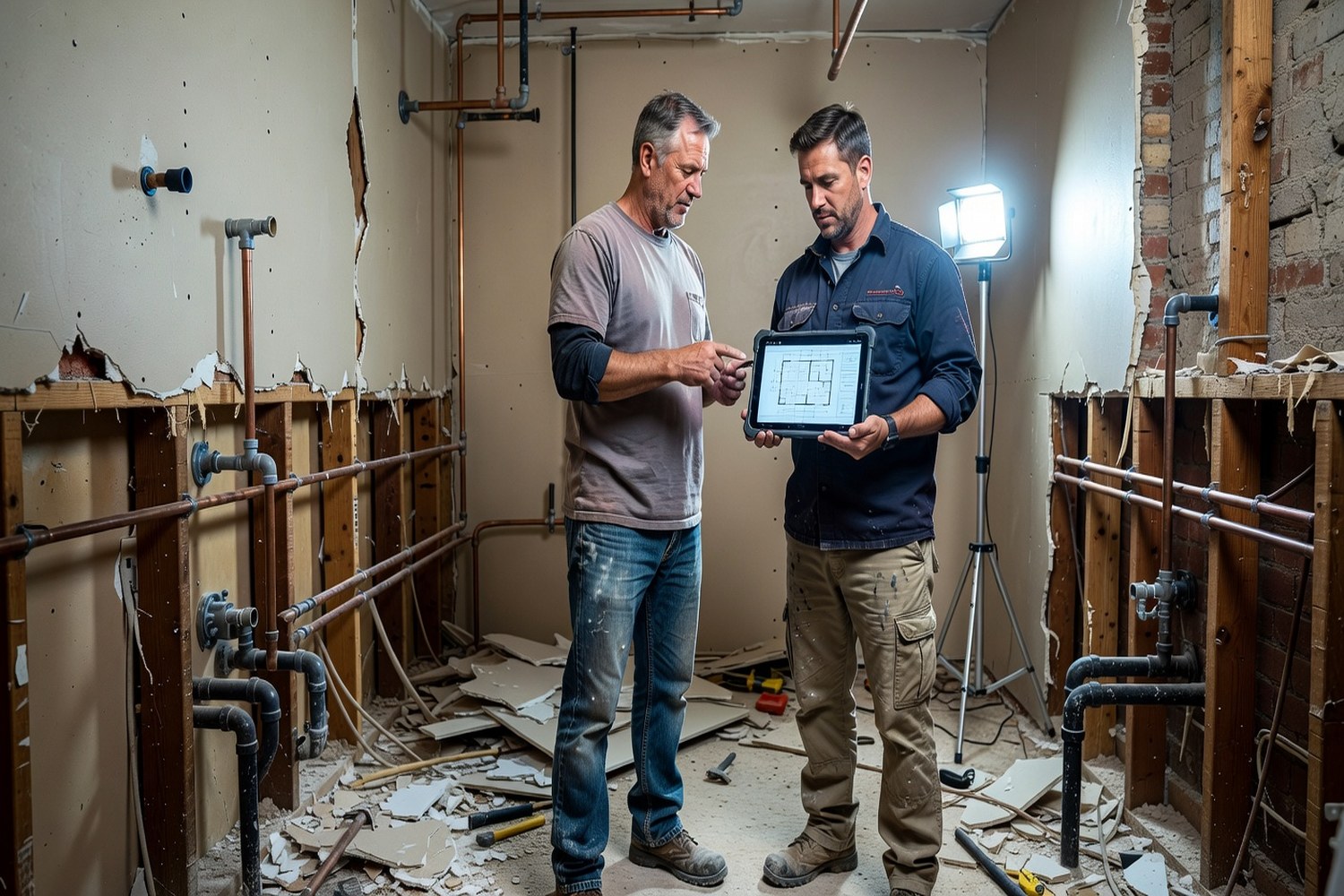
Before you start comparing loans, you need a realistic number — because the gap between what people think a bathroom remodel costs and what it actually costs is enormous. I’ve watched friends budget $8,000 for a “simple refresh” and end up at $16,000 when the contractor pulled out the vanity and discovered rotted subfloor, outdated plumbing that didn’t meet code, and mold behind the tile. Surprises aren’t unusual in bathroom renovations — they’re the norm.
Here’s what the numbers actually look like in 2026. A cosmetic update — new vanity, new mirror, fresh paint, updated lighting, and replacing the toilet — runs $3,000-$7,000 depending on fixture quality and your market. A midrange remodel — replacing the tub/shower, new tile floor, new vanity and countertop, updated plumbing fixtures, and proper ventilation — costs $12,000-$18,000 nationally. A full gut renovation — moving plumbing, expanding the footprint, custom tilework, heated floors, frameless glass shower enclosure, double vanity — hits $25,000-$50,000. And a luxury master bath with premium materials, freestanding soaking tub, steam shower, and custom cabinetry can reach $60,000-$100,000+.
The smart move: get three contractor quotes before you apply for financing. The quotes give you a real number to borrow against — not a Pinterest estimate. Add 15-20% to the highest quote as a contingency buffer for the surprises you’ll discover behind the walls. If the quotes come in at $15,000, apply for $17,000-$18,000. Running out of money mid-renovation is worse than borrowing slightly more than you think you need — because a half-finished bathroom is both unusable and unsellable.
Get three contractor quotes and add 15-20% contingency before applying for financing — surprises behind the walls are the rule, not the exception.
Financing Options Ranked
1. 0% APR credit card (best for $3K-$8K cosmetic updates). If your project is a cosmetic refresh you can pay off within 12-21 months, this is free money. Chase Slate Edge, Citi Simplicity, and several business cards offer 0% intro APR on purchases. Charge the tile, fixtures, and contractor labor. Pay it off before the promo ends. Total financing cost: $0. The risk: if you don’t pay it off in time, the regular APR (18-26%) kicks in, and you’re suddenly paying credit card rates on a home improvement — the worst of all worlds.
2. Personal loan (best for $5K-$50K, most projects). The most popular bathroom remodel financing choice because it checks every box: no collateral (your home isn’t at risk), fixed rates (6-36% APR depending on credit), fast funding (1-3 days at most online lenders), and terms of 2-7 years that keep payments manageable. LightStream offers the lowest rates (6.49% floor with autopay) and terms up to 144 months for home improvement — that’s 12 years on a bathroom remodel. SoFi adds unemployment protection. Upgrade accepts credit scores as low as 580. For a $15,000 midrange remodel at 10% over 5 years: $319/month, $4,121 total interest.
3. HELOC (best for $25K+ major remodels if you have equity). A home equity line of credit offers the lowest rates (7-9% variable for 720+ borrowers) and the potential tax deduction on interest if funds are used for home improvement. You draw what you need as the project progresses — useful when costs change mid-build. But: closing costs of $2,000-$5,000, variable rate risk, 2-4 week timeline, and your home is collateral. For a $15,000 project, closing costs can eat 13-33% of the loan — making a HELOC uneconomical at smaller amounts. The breakeven point where HELOC savings offset closing costs is typically around $25,000-$30,000.
4. Home equity loan (best for $20K+ when you want fixed rate). Like a HELOC but with a fixed rate and lump-sum distribution. Rates: 7-9% for good credit. Same closing costs and timeline as HELOC. Better than HELOC if you know the exact amount you need and want payment predictability. Worse if your project scope might change (you can’t draw additional funds without refinancing).
5. Contractor financing (compare carefully). Many bathroom remodeling companies (Re-Bath, Bath Fitter, national chains) offer in-house financing through partners like GreenSky, Upgrade, or Synchrony. Convenience is the appeal — you apply during the sales consultation and get approved on the spot. But the rates are often 2-5% higher than you’d get applying directly to the same lender. Always compare the contractor’s financing offer to your own pre-qualified rate from SoFi or LightStream before accepting. If the contractor offers 0% for 12 months, that can be a good deal — but read the fine print for deferred interest (where the full retroactive interest applies if you don’t pay off the balance in time).
Comparison Table
Option
Rate
Best For
Speed
Risk
Cost on $15K/5yr
0% APR Card
0% (promo)
$3K-$8K updates
Instant
Low
$0 (if paid in promo)
Personal Loan
6%-36%
$5K-$50K most projects
1-3 days
No home risk
$4,121 (10%)
HELOC
7%-9%
$25K+ major remodels
2-4 weeks
Home is collateral
$3,093 (8%) + closing
Home Equity Loan
7%-9% fixed
$20K+ fixed amount
2-4 weeks
Home is collateral
$3,093 (8%) + closing
Contractor Finance
8%-30%
Convenience
Same day
Varies
$4,951 (12%) typical
Cost estimates for $15,000 over 5 years at representative rates. HELOC/HE loan costs exclude closing costs ($2,000-$5,000). March 2026.
Personal Loans for Bathroom Remodels
Personal loans are the default answer for most bathroom remodels — and for good reason. Here’s why they dominate this space, and which lenders to look at first.
LightStream — the best rate for home improvement loans specifically. LightStream has a dedicated “home improvement” loan category with rates starting at 6.49% (with autopay) and terms up to 144 months. That 12-year term is unusually long for a personal loan and dramatically reduces monthly payments. On a $20,000 bathroom remodel at 7.5% over 84 months: $303/month. Zero origination fee, zero late fees, same-day funding. The Rate Beat Program guarantees they’ll beat any competitor’s rate by 0.10%. The catch: no soft-pull pre-qualification on their site (use Credible for that), and you’ll need 695+ credit to qualify.
SoFi — best for borrowers who want a safety net. SoFi’s unemployment protection means if you lose your job mid-renovation, they’ll pause your payments for up to 12 months. When you’re already stretched by a remodel, that protection is genuinely valuable. Rates start at 8.74%, no origination fee, same-day funding. $5,000 minimum means most bathroom remodels qualify. At $15,000 over 60 months at 9%: $311/month, $3,678 total interest.
Upgrade — best for fair-credit borrowers (580-699). If your credit isn’t strong enough for LightStream or SoFi, Upgrade is the most accessible mainstream lender. Accepts 580+ credit scores with multiple rate discounts (autopay, direct-pay). Origination fee of 1.85-9.99% is the trade-off. On a $15,000 bathroom loan at 15% over 60 months (fair credit): $357/month, $6,404 total interest. Not cheap, but far better than credit card rates (22-26%) and infinitely better than contractor financing at 25%+.
⚡ Pro Tip: LightStream’s home improvement rates are often 1-2% lower than their general-purpose personal loan rates — but you have to select “home improvement” as the loan purpose during application. If you choose “other” or “debt consolidation,” you’ll get the higher general rate even if the money is going to your bathroom. This one selection during the application can save $1,500-$3,000 on a $20,000 loan. Always select the most specific loan purpose that matches your actual use.
Most midrange bathroom remodels ($12K-$18K) are best served by personal loans — fast funding, no collateral, and fixed monthly payments you can plan around.
HELOC vs. Personal Loan
This is the decision most homeowners agonize over. Here’s the framework that makes it simple.
Choose a personal loan when: Your project is under $25,000 (closing costs on a HELOC eat too much of the savings). You don’t have significant home equity. You want funds in 1-3 days (HELOCs take 2-4 weeks). You refuse to put your home at risk for a bathroom. You want a fixed rate with a defined payoff date.
Choose a HELOC when: Your project is $25,000+ (the lower rate saves enough to overcome closing costs). You have 20%+ equity in your home. You’re doing a phased renovation and want to draw funds as needed. You want the potential tax deduction on interest (IRS rules require the funds be used for home improvement). You’re comfortable with variable rate risk.
The math at $15,000: Personal loan at 10% over 5 years = $4,121 total interest, $0 closing costs. Total financing cost: $4,121. HELOC at 8% over 5 years = $3,286 total interest, $2,500 closing costs. Total financing cost: $5,786. The HELOC costs $1,665 more despite the lower rate. At $15,000, the personal loan wins.
The math at $35,000: Personal loan at 10% over 5 years = $9,615 total interest, $0 closing costs. Total: $9,615. HELOC at 8% over 5 years = $7,668 total interest, $3,000 closing costs. Total: $10,668. Still close, but now the HELOC’s lower rate is starting to close the gap. At $50,000+, the HELOC typically wins on total cost.
Costly Mistakes to Avoid
Borrowing the exact contractor quote with no buffer. Bathroom renovations have a nearly 100% chance of hidden surprises — rotted subfloor, outdated wiring, asbestos tile, plumbing that doesn’t meet current code. If you borrow exactly $14,000 for a $14,000 quote and the contractor finds $3,000 in unforeseen repairs, you’re scrambling for a second loan (at a potentially worse rate) or halting the project. Always borrow 15-20% more than the quote.
Using contractor financing without comparison shopping. When the sales rep says “we can get you approved for 0% for 12 months right now,” it sounds great. But read the fine print. Many contractor financing plans use deferred interest — if you don’t pay the full balance within the promo period, the lender charges all the accrued interest retroactively from day one. On $15,000 at 26.99% deferred for 12 months, that’s $4,049 in surprise interest if you miss the deadline by even one day. A personal loan at 10% is far cheaper and far safer.
Stretching to a 7-year term to lower payments. On a $15,000 bathroom loan at 10%, the monthly payment drops from $319 (5 years) to $249 (7 years). Sounds appealing — but total interest jumps from $4,121 to $5,880, and you’re paying for a bathroom remodel for 7 years when the fixtures will need replacing in 10-12. Keep the term as short as your budget allows. Bathrooms depreciate faster than the debt if you extend too far.
⚡ Pro Tip: Here’s a strategy for larger bathroom remodels ($20K+) that saves real money. Put the first $5,000-$8,000 on a 0% APR credit card (demolition, rough plumbing, tile purchase — the early expenses). Finance the remaining $12,000-$15,000 with a personal loan at the best rate you can get. Pay off the credit card within the promo period (12-21 months) while making minimum payments on the personal loan. Your blended financing cost drops significantly because a portion of the project was financed at 0%. This two-product approach saves $800-$2,000 compared to putting the full $20K+ on a single personal loan.
How to Finance Your Remodel
Step 1: Get 3 contractor quotes and add 15-20% contingency. Your loan amount = highest quote x 1.15 to 1.20. This is the number you’ll apply for. Don’t guess, don’t use online cost estimators as your final number — get real quotes from licensed contractors who’ve walked through your bathroom.
Step 2: Check your credit score. Free via Credit Karma, your credit card issuer, or AnnualCreditReport.com. 720+ puts you in the LightStream/SoFi tier (best rates). 660-719 opens LendingClub, Best Egg, Discover. Below 660: Upgrade, Upstart. Below 580: improve credit before applying — the rate savings are worth the wait.
Step 3: Pre-qualify at 2-3 lenders (soft pull). SoFi, LendingClub, Upgrade all offer soft-pull pre-qualification. For LightStream, use Credible. Compare the APR, monthly payment, and total cost across offers. This takes 15-20 minutes and saves hundreds to thousands of dollars.
Step 4: Apply, fund, and start the project. Choose the best offer, submit the formal application, upload documentation if requested, and receive funds (same day to 3 business days). Most personal loans deposit directly to your bank account — you then pay the contractor on the agreed schedule (typically a deposit, progress payments, and a final payment upon completion).
Frequently Asked Questions
What’s the best loan for a bathroom remodel?
For most homeowners: a personal loan from LightStream (lowest rates, home improvement category) or SoFi (unemployment protection). For projects over $25K with significant home equity: a HELOC may offer lower total cost. For cosmetic updates under $8K: a 0% APR credit card.
How much does it cost to remodel a bathroom?
Cosmetic update: $3,000-$7,000. Midrange remodel: $12,000-$18,000. Full gut renovation: $25,000-$50,000. Luxury master bath: $60,000-$100,000+. Always add 15-20% contingency for hidden surprises behind walls.
Can I get a bathroom remodel loan with bad credit?
Yes. Upgrade accepts 580+ credit scores. Upstart has no minimum score and uses AI underwriting. Expect 15-30% APR at lower credit tiers. On a $15,000 loan at 20% over 5 years: $397/month, $8,847 total interest. Consider whether improving credit first would save more than the wait costs.
Should I use a HELOC or personal loan for my bathroom?
Personal loan for projects under $25K (closing costs on a HELOC eat the rate savings). HELOC for projects over $25K if you have 20%+ equity and are comfortable with variable rate risk. Always compare total cost including closing costs, not just the interest rate.
Is contractor financing a good deal?
Sometimes — 0% offers can be genuinely free if you pay off in time. But watch for deferred interest (retroactive charges if you miss the deadline). Always compare the contractor’s rate to a personal loan pre-qualification before accepting. Many contractor financing programs charge 2-5% more than you’d get directly from the same lender.
Rates and terms are subject to change. This is not financial advice. All information is for educational and comparison purposes only. Bathroom remodel cost estimates based on national averages as of early 2026. Always get multiple contractor quotes and verify current lender rates before committing to financing.
SoFi offers some of the largest personal loan amounts available, up to $100,000. SoFi charges no origination fees, no prepayment penalties, and no late fees. Members get access to financial planning, career coaching, and unemployment protection that pauses payments if you lose your job.
LightStream, a division of Truist Bank, offers loans up to $100,000 with no fees whatsoever. Same-day funding is available, and they offer a Rate Beat program where they’ll beat any qualifying rate by 0.10%.
Marcus charges no fees — no origination fees, no prepayment penalties, and no late fees. Backed by Goldman Sachs, Marcus offers competitive rates and flexible payment terms from 36 to 72 months.
Upgrade accepts credit scores as low as 580 and offers loans from $1,000 to $50,000. Reports to all three credit bureaus, helping build credit with on-time payments. Funds typically deposited within one business day.
Prosper is a peer-to-peer lending marketplace connecting borrowers with individual investors. Offers loans from $2,000 to $50,000 with terms of 24 to 60 months.
The Fed raised the federal funds target range a quarter point to 3-3/4 to 4 percent, lifting the prime rate to 7.00 percent effective September 17, its first increase since July 2023.
Treasury’s 20-year bond auction cleared at a record 5.420 percent with the weakest indirect share since February, and the 10-year closed at 5.00 percent.
Treasury sold 13-week bills at 3.970 percent and 26-week bills at 4.060 percent on September 14, a 17 basis point weekly jump, as the FOMC opened its two-day September meeting.
Federal debt fell to $40.048 trillion on September 10, down $127.9 billion from the August 31 record, as Treasury drew its cash balance at the Fed down by $205.4 billion.
The 2-year to 10-year Treasury spread narrowed to 33 basis points on September 11, its tightest since July 1, as the front end repriced before the September 15 and 16 FOMC meeting.
Core inflation cooled to 2.4 percent in August, the lowest since March 2021, but a 0.3 percent monthly gain pushed September Fed hike odds above 65 percent.