
Treasury Bills Reach 22.4% of Marketable Debt, Highest Share Since 2020
Treasury bills ended fiscal 2026 at $7.118 trillion, or 22.36% of marketable federal debt, the largest fiscal year end share since 2020. Bills grew $721.1 billion over the year.


Remodeling budgets are where optimism goes to die. Every homeowner starts with a number they’re comfortable with — and every remodel costs 20-40% more than that number. Understanding real costs upfront changes how you think about financing.
A kitchen remodel averages $25,000-$80,000 depending on whether you’re refreshing (paint, hardware, countertops) or gutting (new layout, cabinets, plumbing, electrical, appliances). A minor kitchen facelift (new countertops, cabinet refacing, updated backsplash, new appliances) runs $15,000-$30,000. A major kitchen remodel with custom cabinets, stone countertops, new flooring, reconfigured plumbing, and professional-grade appliances: $50,000-$100,000+. The kitchen is consistently the most expensive room to remodel and the one most likely to exceed budget.
A bathroom remodel runs $10,000-$35,000 for a standard guest bath and $25,000-$60,000 for a master bath with walk-in shower, soaking tub, double vanity, and heated floors. Plumbing relocation (moving the toilet, shower, or sink to a different position) adds $3,000-$8,000 per fixture — it’s the single biggest cost driver in bathroom remodeling.
A whole-home remodel (kitchen + 2 bathrooms + flooring throughout + painting + lighting) runs $40,000-$150,000 for a typical 1,500-2,500 sq ft home. A gut renovation (taking everything down to studs and rebuilding) costs $100-$250 per square foot — that’s $150,000-$375,000 for a 1,500 sq ft home. At this level, you’re in construction loan or home equity territory, not personal loans.
The 20% contingency rule is non-negotiable. Once walls come down, surprises appear: outdated wiring that doesn’t meet code ($3,000-$10,000 to replace), plumbing that’s corroded ($2,000-$8,000), mold behind tile ($1,500-$5,000 to remediate), and structural issues ($5,000-$20,000). Finance your contractor’s quote × 1.20 — not the bare quote itself.

Before financing, add 20% to your contractor’s quote — hidden issues behind walls are the rule, not the exception.
1. Personal loan (best for remodels under $50K or homeowners without equity). No collateral, no appraisal, funding in 1-3 days. You receive a lump sum and pay contractors directly on your schedule. LightStream offers up to $100K with terms up to 20 years (240 months) specifically for home improvement — the longest personal loan term on the market. On $35,000 at 8% over 84 months: $548/month, $11,006 total interest. Best for: recent homebuyers without equity, fast-track projects, and remodels where you want total control of the money.
2. HELOC (best for phased remodels with equity). A revolving credit line secured by your home. Draw funds as each phase progresses — you only pay interest on what you’ve used, not the full credit line. Rates are variable (currently 7-9%), and most HELOCs have a 10-year draw period followed by a 20-year repayment period. On a $60,000 HELOC at 8% used over 6 months as the remodel progresses: you pay interest only during the draw period, then convert to fixed repayment. Best for: multi-room remodels happening in phases over several months.
3. Home equity loan (best for one-time large remodels with equity). A fixed-rate lump sum secured by your home. Rates run 7-9% — typically 2-4% below personal loans. On $75,000 at 7.5% over 15 years: $695/month, $50,146 total interest. The interest may be tax-deductible if used for substantial home improvements (consult a tax professional). Best for: whole-home remodels where you know the total cost upfront and want a fixed, predictable payment.
4. Cash-out refinance (best when mortgage rates are favorable). Replace your current mortgage with a larger one and keep the difference as cash. Only makes sense if current rates are near or below your existing rate — otherwise you’re raising the cost of your entire mortgage just to fund a remodel. In the current rate environment (6.5-7.5%), this is rarely the best option unless your existing rate is higher.
5. FHA 203(k) loan (best for buying and renovating a fixer-upper). Government-backed loan that combines the purchase price and renovation costs into a single mortgage. Low down payment (3.5%), flexible credit requirements (580+). Two versions: Standard 203(k) for major renovations over $5,000, and Limited 203(k) for cosmetic updates up to $35,000. Best for: buyers purchasing a home that needs work — not for existing homeowners.
6. Contractor financing (compare carefully). Many remodeling companies offer financing through partners like GreenSky, Mosaic, or Service Finance. Convenience: you apply during the estimate process. Risk: rates may be 2-5% higher than what you’d get pre-qualifying independently, and some promotional “0% for 12 months” offers carry deferred interest. Always pre-qualify on your own first, then compare.
| Option | Rate | Amount | Term | Best For |
| LightStream | 6.49%-25.49% | $5K-$100K | 2-20 years | Lowest rate, longest terms |
| SoFi | 8.74%-29.99% | $5K-$100K | 2-7 years | No fees, same-day funding |
| HELOC | 7%-9% variable | Up to 85% LTV | 10yr draw + 20yr | Phased remodels with equity |
| Home Equity Loan | 7%-9% fixed | Up to 85% LTV | 5-30 years | Large fixed-cost remodels |
| Upgrade | 8.49%-35.99% | $1K-$50K | 2-7 years | Fair/bad credit (580+) |
| FHA 203(k) | Market mortgage rates | Varies | 15 or 30 years | Buying a fixer-upper |
Rates are general ranges as of early 2026. HELOC rates are variable. Pre-qualify to see your specific offer.
LightStream — the clear leader for home remodel financing. Their home improvement category starts at 6.49% APR with autopay, offers up to $100,000, and — critically — extends terms up to 20 years (240 months). That 20-year term is what makes LightStream stand out for expensive remodels: a $60,000 kitchen remodel at 7.5% over 240 months is only $483/month versus $942/month over 84 months. Same-day funding, zero fees, Rate Beat guarantee. Requires roughly 695+ credit and strong income.
SoFi — best for remodels with uncertain timelines. Renovation projects are notorious for delays (contractor scheduling, permit holdups, supply chain issues). SoFi’s unemployment protection means if you lose your job during a 6-month remodel, you have a safety net. No origination fee, rates from 8.74%, up to $100K. On $30,000 at 10% over 60 months: $637/month, $8,243 total interest.
Discover — no fees and flexible for mid-range projects. Rates from 7.74%, up to $40,000, no origination or prepayment fees. The $40K cap means Discover works for single-room remodels (kitchen or bathroom) but not whole-home projects. On $25,000 at 9% over 84 months: $408/month, $9,290 total interest. Funding within one business day.
This is the most common remodel financing question — and the answer depends on how your project is structured.
Choose a HELOC if: your remodel happens in phases (kitchen first, then bathrooms, then flooring), costs will arrive in stages over several months, you want to pay interest only on the amount you’ve drawn so far, and you’re comfortable with a variable rate. A HELOC at 8% on a $60,000 credit line where you draw $15,000/month over 4 months costs significantly less in interest during the project than a home equity loan where you take the full $60,000 on day one.
Choose a home equity loan if: you know the exact total cost, want a fixed rate for predictable payments, prefer receiving the entire amount upfront, and plan to pay a single contractor for a complete project. A $75,000 home equity loan at 7.5% fixed for 15 years: $695/month, same payment every month for 15 years, no rate surprises.
The tax angle: Interest on both HELOCs and home equity loans is potentially tax-deductible when the funds are used for substantial home improvements. The IRS requires that the improvement “substantially improves” the home — a kitchen remodel qualifies, a vacation funded by a HELOC does not. The deduction limit is interest on up to $750,000 in total mortgage debt (including your primary mortgage). Personal loan interest is never deductible. For a $60,000 remodel at 8% over 15 years, the tax deduction could save $1,000-$3,000 per year depending on your tax bracket — making the home equity option significantly cheaper after tax benefits.
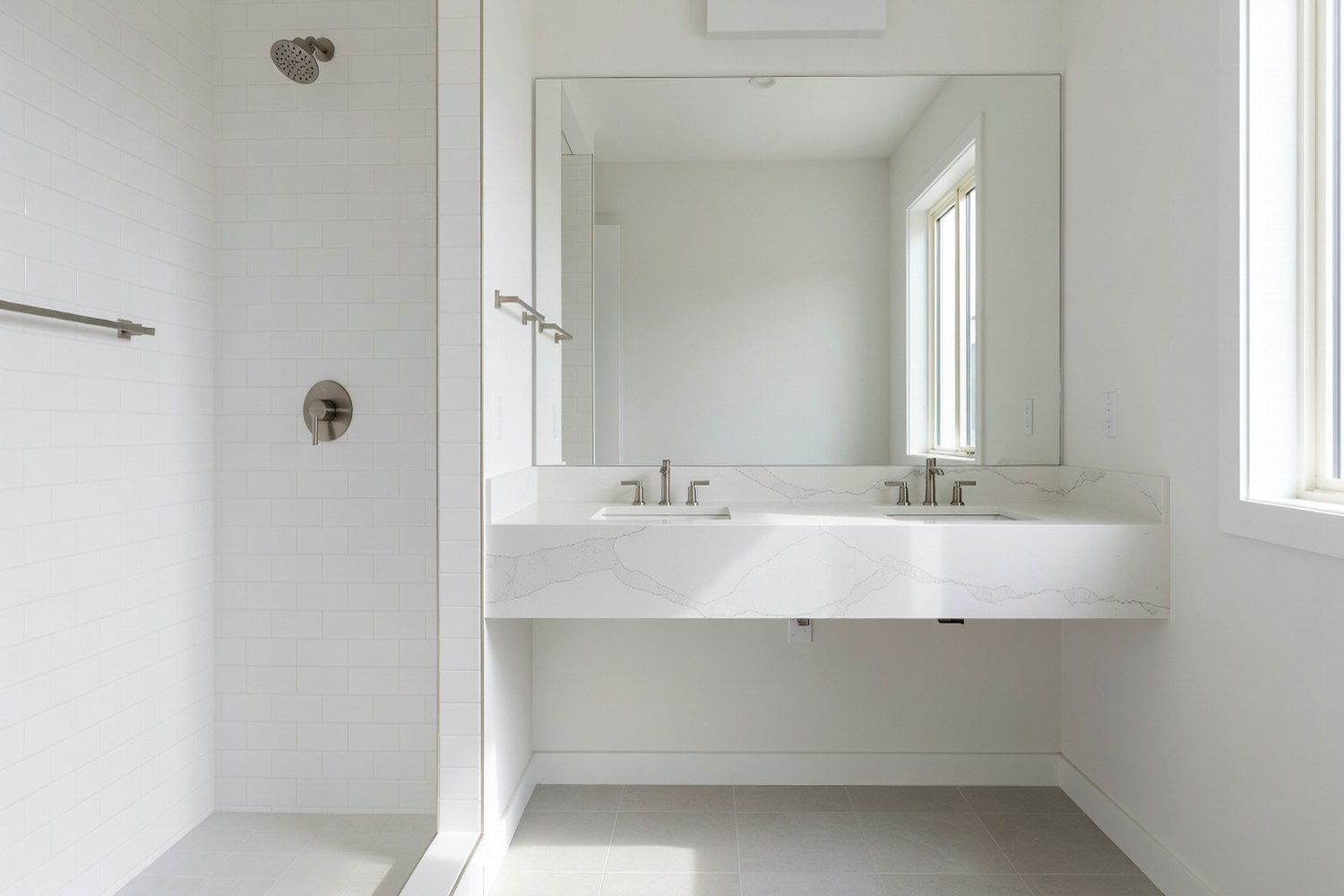
A bathroom remodel ($10,000-$35,000) recovers 60-75% of its cost at resale — and a personal loan gets it funded in days without touching your home equity.
Not all remodels are equal investments. If you’re financing, it matters which projects put money back in your pocket at resale versus which ones are pure lifestyle spending.
Highest ROI projects: Garage door replacement recovers roughly 190% of its cost at resale — the single highest-return project you can do. Manufactured stone veneer on the front exterior recovers about 153%. A minor kitchen remodel (under $25,000) recovers 96%. These are the projects worth financing aggressively because they more than pay for themselves.
Solid ROI projects (60-80% recovery): Bathroom remodel (both midrange and upscale), siding replacement, window replacement, deck addition. These are good investments that improve your home’s value and your quality of life — the financing cost is partially offset by property value gains.
Low ROI projects (50% or less recovery): Major kitchen remodel (upscale), master suite addition, backyard patio. These are lifestyle improvements — you do them because you want to enjoy them, not because they’re financial investments. Finance these more conservatively (shorter terms, lower amounts) because you won’t recover the full cost at resale.
Step 1: Get 3 contractor bids with identical scope. Specify every detail: materials, fixtures, appliance models, demolition, disposal, and permitting. Bids on the same scope should be within 15-25% of each other. If one bid is 40%+ below the others, that’s a red flag — not a deal.
Step 2: Add 20% contingency to the middle bid. This is your financing target. A $40,000 quoted remodel becomes $48,000 in financing. The $8,000 buffer covers code-required upgrades, hidden damage, and material price changes between quote and construction.
Step 3: Decide based on your equity position. Recent homebuyer with little equity → personal loan. Significant equity (20%+ of home value after mortgage) → HELOC or home equity loan. Buying a fixer-upper → FHA 203(k). The equity question is the single biggest factor in choosing your financing path.
Step 4: Pre-qualify at 3+ lenders. For personal loans: LightStream, SoFi, and your bank/credit union. For HELOC/equity: your mortgage servicer (often has streamlined options), a local credit union, and one online lender. Compare APR, monthly payment, total cost, and closing costs (HELOCs may have $2,000-$5,000 in closing costs).
Step 5: Fund before signing the contract. Get your loan funded or HELOC established before signing the contractor agreement and paying the deposit. This ensures you have the money available, prevents delays, and gives you negotiating leverage.
It depends on the project size and your equity. Under $50K with no equity: personal loan (LightStream at 6.49%+). $50K+ with equity: HELOC for phased projects or home equity loan for fixed-cost projects. Buying a fixer-upper: FHA 203(k) loan. Always pre-qualify at 3+ lenders and add 20% contingency to contractor quotes.
Kitchen: $25,000-$80,000. Bathroom: $10,000-$35,000. Whole-home (kitchen + bathrooms + flooring + paint): $40,000-$150,000. Gut renovation: $100-$250/sq ft. Always add 20% contingency for hidden issues.
Personal loan wins on speed (1-3 day funding vs. 2-4 weeks), simplicity (no appraisal), and safety (your home isn’t collateral). HELOC wins on rate (2-4% lower), tax deductibility, and flexibility for phased projects. Choose based on your equity position, project timeline, and risk tolerance.
Home equity loan and HELOC interest may be deductible if the funds are used for substantial home improvements and total mortgage debt is under $750,000. Personal loan interest is never deductible. Consult a tax professional for your specific situation.
Personal loan: 1-3 days from application to funding. HELOC: 2-4 weeks (requires appraisal and closing). Home equity loan: 2-4 weeks. FHA 203(k): 30-45 days. Plan your financing timeline around your contractor’s start date.
Rates and terms are subject to change. This is not financial advice. All information is for educational and comparison purposes only. Remodeling costs based on national averages and the Remodeling Cost vs. Value Report. Tax deductibility depends on individual circumstances — consult a tax professional. Always get multiple contractor bids and verify current lender rates before committing.
Treasury bills ended fiscal 2026 at $7.118 trillion, or 22.36% of marketable federal debt, the largest fiscal year end share since 2020. Bills grew $721.1 billion over the year.

Fed Governor Christopher Waller said 16 of 18 officials who filed September projections expect another 2026 rate increase, and that the hikes need not come at back to back meetings.

Total public debt outstanding reached $40,305,316,210,829.72 on October 8, 2026, the first reading ever above $40.3 trillion and up $133.49 billion in six business days.

Treasury’s blended rate on all interest bearing federal debt reached 3.531% on September 30, the highest since April 2009, while new 30-year bonds cleared 5.618%.

Minutes of the September FOMC meeting show a unanimous 12 to 0 vote to raise rates and most officials expecting one more increase before the end of 2026.

The federal debt grew $2.46 trillion in fiscal 2026 and closed at $40.097 trillion, the first fiscal year to end above $40 trillion. Here is what it costs.