| Reviewed by Mitch Strohm | Last Updated: March 2026
Bakery business loans range from 6.0% to 36.0% APR for $5,000 to $500,000, with equipment financing at 6%–16% covering commercial ovens, mixers, and display cases while SBA 7(a) loans fund full bakery build-outs at 10.5%–13.5% APR. Bluevine and Fundbox provide working capital lines in 24–72 hours for ingredient purchasing and seasonal cash flow.
Key Takeaways
- Opening a bakery costs $50,000–$250,000 depending on whether you lease, build out, or buy an existing location — commercial ovens alone run $5,000–$30,000 per unit.
- Equipment financing at 6%–16% APR is the cheapest route for bakery-specific assets because ovens, mixers, proofers, and display cases serve as their own collateral.
- The average bakery generates $325,000–$450,000 in annual revenue with net margins of 5%–9% on retail and 15%–25% on wholesale/catering, according to industry benchmarks.
- SBA microloans (up to $50K at 8%–13%) are ideal for startup bakeries that need less than six figures for initial build-out and first inventory orders.
- A $30K line of credit from Bluevine at 12% APR costs $300/month in interest on a full draw — enough to cover 4–6 weeks of flour, sugar, butter, and packaging at wholesale prices.
Best Lenders for Bakery Loans
Bakeries qualify for the same business loan products as any food service operation. The lenders below are most competitive for bakery-sized loans ($25K–$250K). Rates are current as of March 2026 and reflect typical approval ranges based on data from the CFPB’s small business lending database.
Rates verified March 2026. Your rate depends on credit, revenue, and time in business.
| Lender | APR Range | Loan Amount | Min FICO | Term | Funding Speed | Best For |
|---|
| Equipment financing | 6.0%–16.0% APR | $5K–$500K | 600 | 2–7 yr | 3–7 days | Ovens, mixers, display cases |
| Bluevine | 7.8%–25.0% APR | $5K–$250K | 625 | 6–12 mo (LOC) | 24 hours | Ingredient purchasing, working capital |
| Kabbage (Amex) | 3.0%–18.0% APR | $2K–$250K | 640 | 6–24 mo | Same day | Small seasonal purchases |
| SmartBiz (SBA 7a) | 10.5%–14.0% APR | $30K–$350K | 675 | 10–25 yr | 7–30 days | Full build-out, acquisition |
| SBA Microloan | 8.0%–13.0% APR | Up to $50K | 620 | Up to 6 yr | 2–6 weeks | Startup bakeries under $50K |
| Fundbox | 10.1%–20.0% APR | $1K–$150K | 600 | 12–24 wk | Next day | Low-credit owners, small draws |
How Much Does It Cost to Open a Bakery?
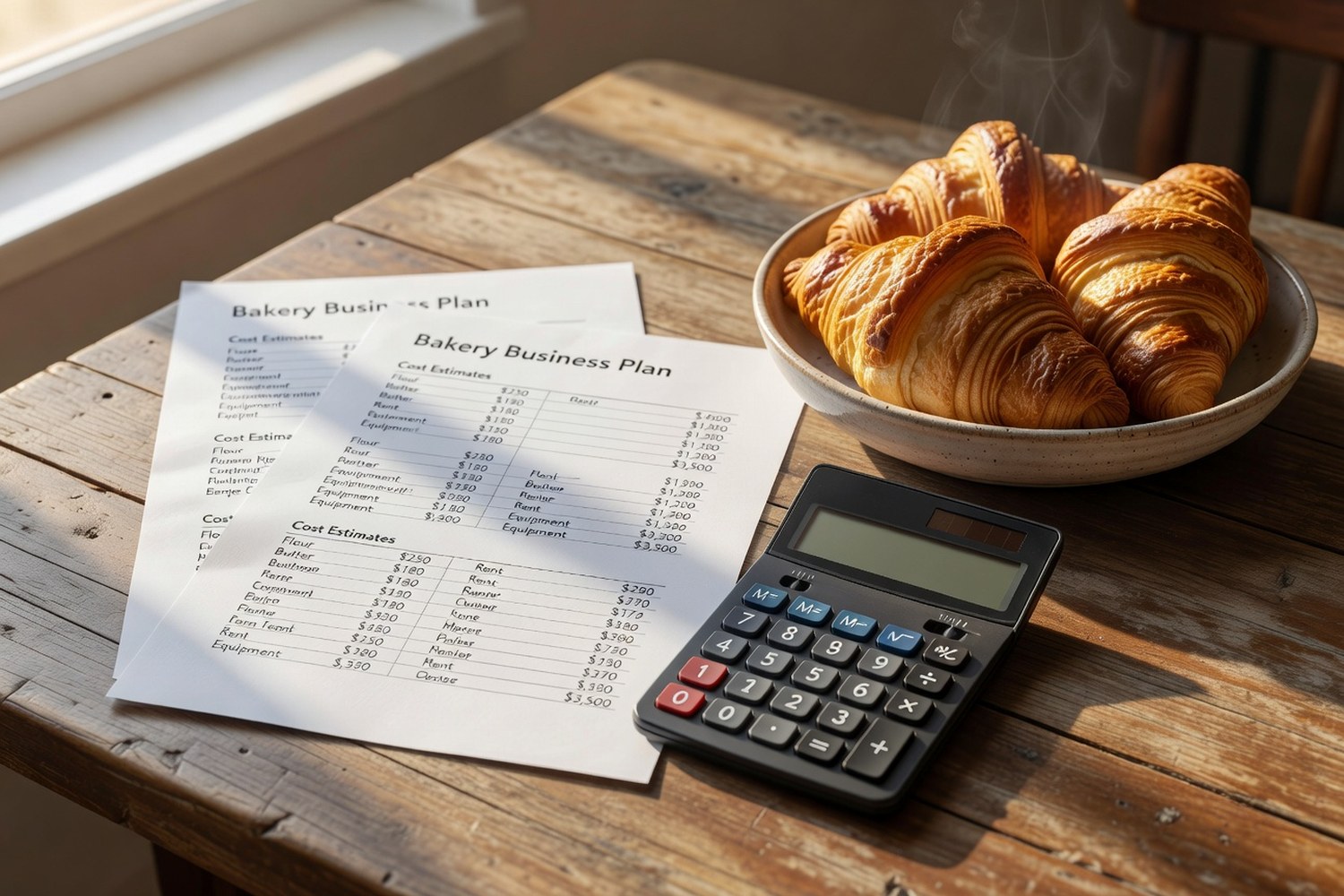
Startup costs for a retail bakery range from $50,000 to $250,000 depending on location, scale, and whether you build from scratch or convert an existing food service space. According to the SBA’s startup cost guide, food service businesses should plan for 6–12 months of pre-revenue expenses.
Equipment ($20,000–$80,000): A commercial deck oven runs $5,000–$30,000. A 20-quart stand mixer costs $1,500–$4,000. Proofers, sheeters, refrigerated display cases, and smallwares add $10,000–$40,000. Used bakery equipment through restaurant auctions can cut costs by 40%–60%.
Lease and build-out ($15,000–$80,000): Food service build-outs require commercial kitchen ventilation ($5,000–$15,000), grease traps, upgraded electrical for three-phase power ($3,000–$8,000), and health department-compliant surfaces. Converting an existing restaurant space saves $20,000–$40,000 versus building from bare walls.
Initial inventory and supplies ($5,000–$15,000): First wholesale orders for flour, sugar, butter, eggs, chocolate, and packaging. Bakeries with wholesale accounts at distributors like US Foods or Sysco often get net-30 terms, reducing upfront cash needs.
Permits, insurance, and working capital ($10,000–$30,000): Food handler certifications, business licenses, health department permits, commercial liability insurance ($1,500–$4,000/year), and 3–6 months of operating reserves for rent, utilities, and payroll during ramp-up. The Census Bureau classifies retail bakeries under NAICS 311811 — use this code on loan applications.
💡 Pro Tip: Buy used equipment at restaurant auctions before financing new. Deck ovens that cost $15,000–$25,000 new sell for $5,000–$10,000 at liquidation auctions, and commercial mixers drop 50%–60% in resale. Finance only the items you cannot find used (proofers, specialized sheeters). A $40K equipment loan shrinks to $15K when you source 60% used — saving $2,500 in interest over 3 years at 10% APR. Use the Equipment Loan Calculator to model exact savings.
Types of Bakery Business Loans
Equipment financing. The most cost-effective option for bakery-specific assets. Ovens, mixers, proofers, and refrigerated cases serve as their own collateral at 6%–16% APR. A $25K equipment loan at 8% over 5 years costs $507/month. Approval takes 3–7 days with 600+ FICO. Compare rates with the Equipment Loan Calculator.
Business lines of credit. Essential for bakeries because ingredient costs fluctuate with commodity prices — butter alone has ranged from $2.50 to $4.50 per pound in recent years. A $30K–$50K line from Bluevine lets you stock up when wholesale prices dip and repay as baked goods sell. Interest accrues only on drawn amounts. Compare fast funding options for seasonal inventory needs.
SBA 7(a) loans. Best for bakery build-outs and acquisitions over $50K. SmartBiz streamlines the SBA process at 10.5%–14% APR with 10–25 year terms. A $150K bakery build-out at 11.5% over 10 years costs $2,117/month. Requires 675+ FICO and 2+ years in business. Review your eligibility with the SBA Loan Calculator.
SBA microloans. Capped at $50K with 8%–13% APR and 6-year terms. Excellent for startup bakeries that need less than six figures. Available through local SBA intermediary lenders with free business counseling included. The SCORE mentorship network pairs bakery owners with food service industry mentors.
Short-term online loans. For urgent needs — an oven breakdown during holiday season, a rush wholesale order, or an opportunity to take over a competitor’s lease. OnDeck funds same-day at 27%–99% APR. A $10K emergency oven repair at 30% for 6 months costs $1,600 in interest — manageable if it prevents losing $30K+ in holiday revenue.
How to Qualify for a Bakery Business Loan
Credit score. Equipment financing and Fundbox accept 600+ FICO. Bluevine and Kabbage require 625–640. SBA microloans require 620+. SBA 7(a) requires 675+. A 720 FICO bakery owner gets equipment financing at 6% while a 610 owner pays 14% — a $2,400/year difference on a $30K balance.
Revenue. Online lenders require $100K+ annual revenue. The average retail bakery generates $325,000–$450,000 annually. Startup bakeries with less than one year of revenue can qualify for SBA microloans and equipment financing based on projections, personal credit, and a solid business plan.
Time in business. Online lenders accept 6–12 months. SBA 7(a) requires 2+ years. Home bakers transitioning to commercial can count their home-based business history if they have documented sales and tax filings. The FDIC reports that small business lending for food service has remained stable in 2025–2026.
Business plan. SBA lenders require a formal plan with market analysis, revenue projections, and a menu cost analysis. For bakeries, emphasize your cost of goods sold (COGS of 25%–35% is healthy), gross margins (65%–75% on baked goods), and foot traffic projections from your location. The SBA’s business plan template includes food service-specific guidance.
💡 Pro Tip: Add wholesale accounts before applying for a loan. Bakeries that supply restaurants, coffee shops, or grocery stores generate 15%–25% net margins on wholesale vs 5%–9% on retail. Lenders weigh B2B contracts heavily because they represent committed, recurring revenue. Landing 3–5 wholesale accounts generating $3,000–$5,000/month each can boost your approved loan amount by 30%–50% and lower your rate by 2–4 points. Your local restaurant business loans page has resources for connecting with food service buyers.
Best Uses for Bakery Financing
Commercial oven packages. A deck oven ($8K–$25K), convection oven ($3K–$10K), and proofer ($2K–$6K) total $13K–$41K. Equipment financing at 6%–16% uses the units as collateral. Buying as a package from a single vendor often includes installation and warranty at lower total cost.
Build-out and renovation. Food service build-outs run $50–$120 per square foot. A 1,200 sq ft bakery costs $60K–$144K for ventilation, plumbing, electrical, flooring, and finishes. SBA 7(a) keeps payments under $1,500/month on amounts up to $150K at 11% over 10 years.
Working capital for ingredients. Flour, butter, sugar, and eggs cost $3,000–$8,000/month for an active retail bakery. A $25K–$40K line of credit covers 3–5 months of ingredient costs at wholesale prices, with repayment from daily sales.
Second location or food truck. A bakery food truck costs $50K–$100K outfitted. A second retail location costs $75K–$200K. Both are strong candidates for SBA 7(a) financing because they represent tangible revenue expansion backed by your proven first-location track record.
Marketing and e-commerce. A $5K–$15K investment in a professional website with online ordering (Shopify, Square Online), local SEO, and social media advertising can increase revenue 20%–40%. Bakeries with strong card volume can use a small line of credit to fund marketing and repay from increased sales.
Frequently Asked Questions
How much does it cost to open a bakery?
Startup costs range from $50,000 to $250,000. Equipment runs $20K–$80K (ovens, mixers, proofers, display cases). Build-out costs $15K–$80K depending on whether you convert an existing space or build from scratch. Budget 6 months of operating expenses ($30K–$60K) as reserve for the ramp-up period.
What credit score do I need for a bakery loan?
Equipment financing accepts 600+ FICO. SBA microloans require 620+. Bluevine and Kabbage require 625–640. SBA 7(a) requires 675+. Improving from 620 to 700 can save $2,000–$5,000/year in interest on a typical $40K bakery loan.
Can I get a loan to buy an existing bakery?
Yes. SBA 7(a) loans are the primary acquisition financing vehicle. You can borrow up to $5 million to purchase an existing bakery with the business and equipment as collateral. Most acquisition loans require 10%–20% buyer equity. The seller’s financial records and your business plan determine approval.
What is the best loan for bakery equipment?
Equipment financing at 6%–16% APR, where the ovens, mixers, and cases serve as collateral. A $25K equipment loan at 8% over 5 years costs $507/month. No additional collateral required. Consider buying 40%–60% of equipment used at auction to reduce the financed amount.
Are bakeries profitable enough to qualify for loans?
Yes. The average retail bakery generates $325K–$450K annually with gross margins of 65%–75% on baked goods. Net margins of 5%–9% on retail and 15%–25% on wholesale are typical. Lenders need 1.25x DSCR, meaning $50K net income supports roughly $3,300/month in loan payments.
How long does it take to get a bakery business loan?
Online lenders fund in 24–72 hours. Equipment financing takes 3–7 days. SBA microloans take 2–6 weeks. SBA 7(a) through SmartBiz takes 7–30 days. Apply to 2–3 lenders simultaneously since most use soft credit pulls for prequalification.
Advertiser Disclosure: PrimeRates.com may receive compensation from lenders when you click through and complete an application. This does not affect our editorial objectivity or rankings. Financial Disclaimer: This content is for informational purposes only and does not constitute financial advice. Rates and terms are subject to change. Consult a licensed financial professional before making borrowing decisions.
References & Further Reading
Keep Reading