June CPI Falls 0.4%, the First Monthly Price Drop Since April 2020

June CPI fell 0.4%, the first monthly price decline since April 2020, cutting inflation to 3.5% and hardening the case for a Fed hold on July 28-29.

June CPI fell 0.4%, the first monthly price decline since April 2020, cutting inflation to 3.5% and hardening the case for a Fed hold on July 28-29.
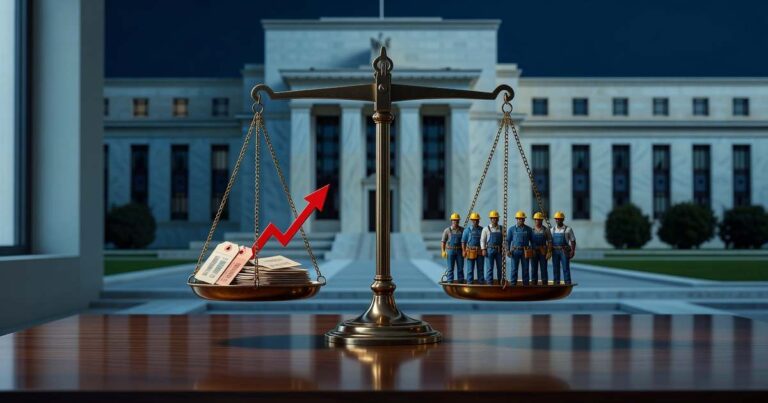
The Fed's dual mandate requires both maximum employment and 2 percent inflation. With core PCE at 3.4 percent and unemployment at 4.2 percent, the two goals now clash.

June CPI lands Tuesday, July 14 at 8:30 a.m. ET, the last major inflation reading before the July 28-29 FOMC. Here is what it means for rates, mortgages, and savings.
The Fed's first Monetary Policy Report under Chair Kevin Warsh vows to deliver price stability, revives a money supply section, and sets up his July testimony.

The Fed has held rates since December, yet the 30-year mortgage sits at 6.49%. Here is how a Fed decision travels through the 10-year Treasury and the spread to your loan.
The U.S. Treasury sold $22 billion of 30-year bonds at 5.058% on July 9, the highest long-bond auction yield since 2007, as foreign demand took nearly 78%.
The June FOMC minutes reveal a Fed split between holding and hiking, with a few officials making a case for higher rates as inflation holds near 4 percent.
Treasury sold $58 billion of three-year notes at a 4.179% high yield on July 7, 2026, with indirect demand firming and prime steady at 6.75% ahead of the June FOMC minutes.
Federal net interest hit $722.7 billion in the first eight months of fiscal 2026, topping national defense by roughly $92 billion, according to Treasury data.

Eight meetings a year, twelve votes, one 2 p.m. statement. Here is how an FOMC meeting actually works and what the July 28-29 session could mean for your rates.